Gutter News
Why Dark Gutter Buildup Looks Like Soil on Louisville Homes
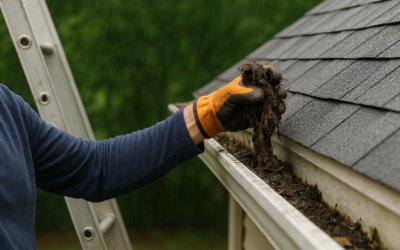
A dark layer inside a gutter may look like garden soil from the ground. It can even hold a small sprout. Yet the material often began as leaves, pollen, dust, roof particles, seeds, and other outdoor debris that changed after repeated exposure to Louisville rain and...
Why Water Pools Below Downspouts After Louisville Rain
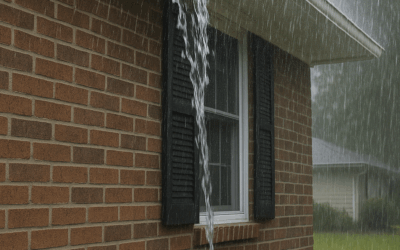
A puddle beneath a downspout is easy to notice and difficult to interpret from one glance. The water may be evidence that roof runoff reached the outlet, while its location and persistence may reflect conditions at ground level. During a different Louisville storm,...
What Louisville’s First Frost Can Show Around a Gutter System
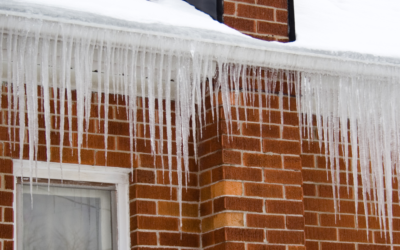
Louisville’s first frosty mornings often arrive while autumn leaves are still falling. A thin white layer may cover the roof and gutters at dawn, then disappear from sunny surfaces while lingering along a shaded eave. In other places, a heavier piece of ice may remain...
Morning Moisture on Louisville Gutters: Condensation or a Leak?
Cool Ohio Valley mornings can leave metal gutters covered with moisture even when no rain fell overnight. At other times, a damp spot below a corner or outlet appears only while the gutter carries runoff. Because both conditions involve visible water, homeowners may...
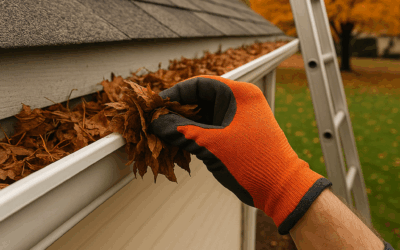
How Fall Leaves Affect Gutter Guards on Louisville Homes
Louisville’s tree canopy sends many kinds of material toward residential rooflines in autumn. Broad leaves, acorns, seed pods, pine needles, twigs, and fine fragments do not interact with gutter guards in the same way. Some remain on top, some move away with wind, and...
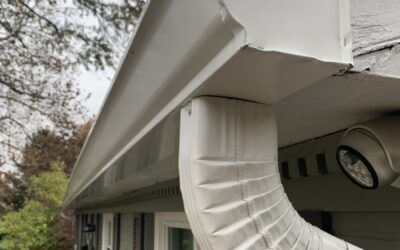
Why Louisville Gutters Develop Streaks, Chalking, and Overflow Stains
Stains on a gutter can reveal how water and weather have interacted with the roofline over time. Some Louisville gutters develop narrow black stripes. Others become dull and powdery, collect green patches in shaded areas, or show a broad dirty band after storms. These...
How Fall Temperature Swings Affect Aluminum Gutters in Louisville
Louisville autumns can bring warm afternoons, cold fronts, cool nights, and the first freezing temperatures of the season. Aluminum gutters react to these changes by expanding slightly with heat and contracting as they cool. That movement is normal. It becomes useful...
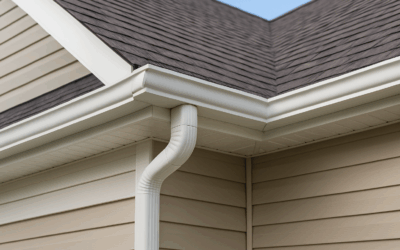
How Roof Pitch and Roof Shape Influence Gutters on Louisville Homes
A gutter receives water from the roof above it, but that water does not arrive evenly along every eave. Roof pitch affects the route and speed of runoff, while valleys, dormers, porches, and intersecting planes determine where the flow is concentrated. These...

Why Is My Downspout Making Noise? A Louisville Homeowner’s Guide
Gurgling, rattling, dripping, and hollow knocks can make a downspout sound more complicated than it looks. The pipe has a simple purpose—carrying roof runoff from the gutter to ground level—but water must pass through several changes in direction along the way. For...
How Autumn Tree Debris Changes Gutter Drainage on Louisville Homes
Louisville's fall tree canopy produces more than colorful leaves. Acorns, seed pods, pine needles, twigs, leaf fragments, and fine organic sediment can all reach a home's gutter system. These materials do not create identical problems. Their shape, weight, and...
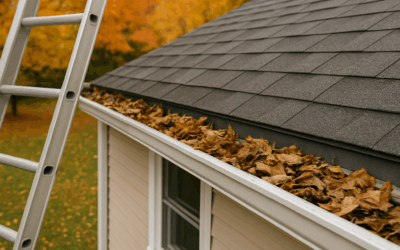
How Autumn Tree Debris Changes Gutter Drainage on Louisville Homes
Louisville's fall tree canopy produces more than colorful leaves. Acorns, seed pods, pine needles, twigs, leaf fragments, and fine organic sediment can all reach a home's gutter system. These materials do not create identical problems. Their shape, weight, and...
Water Between the Gutter and Fascia: What Louisville Homeowners Should Know
A gutter may look like a simple channel, but its performance depends on how several roof-edge components meet. When rainwater appears between the back of the gutter and the fascia board, that transition is no longer directing all visible runoff into the channel. The...