
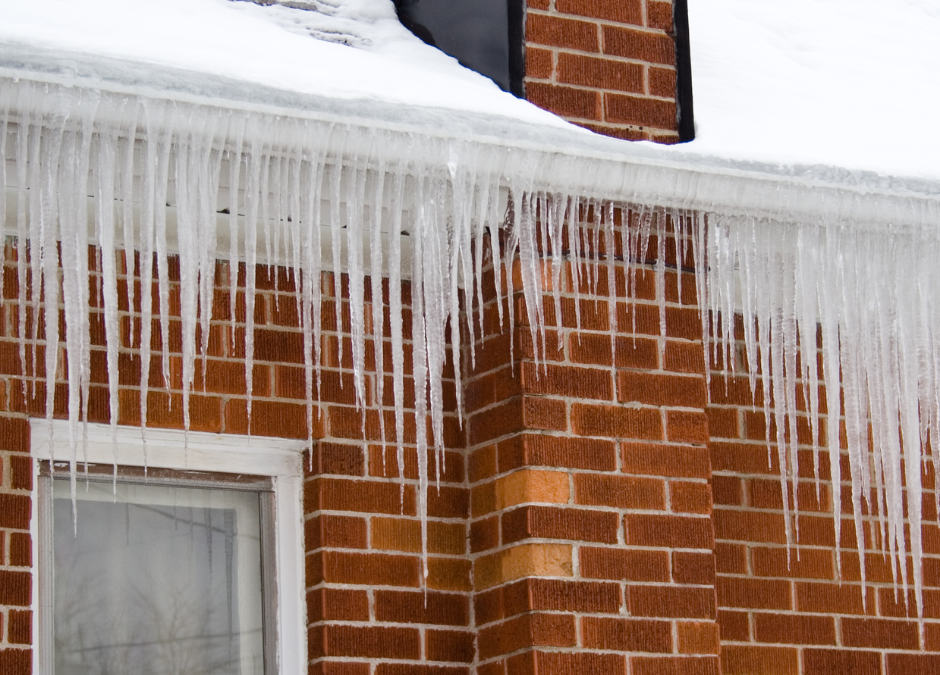
Louisville’s first frosty mornings often arrive while autumn leaves are still falling. A thin white layer may cover the roof and gutters at dawn, then disappear from sunny surfaces while lingering along a shaded eave. In other places, a heavier piece of ice may remain near an outlet or beneath damp debris.
Those appearances are not interchangeable. Learning how surface frost differs from frozen water can help homeowners interpret what they see without treating every icy patch as evidence of a leak or blockage.
Frost Can Form Without Rain
An exposed gutter loses heat overnight. When the metal becomes cold enough, water vapor can change into ice crystals on the surface. Clear skies and light wind can make this cooling more noticeable.
The result is often a fine coating spread across the front, bottom, and top edge. Grass, vehicles, and roof surfaces may show the same condition. Because the moisture comes from the air, exterior frost does not prove that water is leaving the gutter channel.
Morning sun changes the scene quickly. An east-facing run may clear early, while a north-facing gutter beneath tree cover remains frosted. A lingering white area may therefore reflect shade and surface temperature rather than trapped water.
Frozen Standing Water Has a Different Shape
Water already inside a gutter can also freeze, but it typically creates a denser, more localized patch. It may follow the bottom of the channel, fill a shallow low point, surround an outlet, or bind wet debris into a solid mass.
The ice shows that liquid water occupied that space before the temperature fell. It does not explain why. Recent rainfall, melting roof frost, damp leaves, a restricted downspout, or slow movement along the channel can all contribute.
After thawing, watch what remains. A surface coating may simply evaporate or disappear with other frost. A thicker area can leave visible standing water or a damp line. Repetition after several rain-and-freeze cycles is more informative than one isolated morning.
Autumn Debris Can Hold Moisture
Leaves do not need to completely fill a gutter to alter a frost pattern. Small pockets of leaves, seeds, twigs, and decomposed material can retain water below the visible surface. When that material freezes, it may become compact and resist water movement during the next thaw.
The top of the pile may receive sunlight while the underside remains frozen. This helps explain why one small section stays icy after the nearby metal has warmed. It can also cause meltwater to take a temporary path around the frozen material.
Gutter and downspout cleaning deals with debris in the drainage path. It does not prevent atmospheric frost, and an evenly frosted gutter does not by itself indicate a need for cleaning.
What Ice Location May Suggest
Location can help organize possible explanations. A band along the front edge may reflect water that previously crossed the lip. Ice behind the channel follows a separate route along the roof edge or fascia. A concentrated patch where the gutter meets the downspout may show that moisture remained near the outlet.
Icicles require the right sequence: liquid water reaches an edge, begins to drip, and freezes before falling away. They can form from overflow, melting roof frost, or wind-driven moisture. Their presence alone cannot identify the original route.
Louisville’s changing fall temperatures can repeat this process. Daytime melting followed by another freeze can move water and build ice in stages, so the final shape may not match the place where moisture first entered the area.
Ground-Level Observation Is Enough
Do not climb to inspect a frosted roofline. Frost can make roofing, ladder rungs, decks, and pavement slick, and a warming gutter may release ice or debris unexpectedly.
Instead, use binoculars or a phone camera from a stable ground-level position. Photograph the same section early in the morning and after it has warmed. Note the overnight weather, recent rain, shade, and whether surrounding surfaces were also frosted.
During a later rain, remain sheltered and observe the sequence. Does water first cross the front edge, emerge at a joint, travel behind the gutter, or slow near a downspout? Comparing that event with the frost pattern can provide more context.
Interpreting Frost on Louisville Gutters
A broad, delicate coating that clears as temperatures rise is consistent with seasonal frost. A recurring block of ice associated with damp debris, standing water, or a particular overflow path deserves separate attention. Neither should be judged from color alone.
The first frost offers a brief snapshot of how moisture and temperature interact at the roofline. For Louisville homeowners, repeated observations before, during, and after a thaw can provide a clearer picture than a single cold-morning inspection.