Louisville, Kentucky, is no stranger to heavy rain, especially during spring storms and summer downpours. While rainwater is a natural part of the environment, the way it moves across your property can have a major impact on the health of your home’s foundation. Cardinal Gutters presents this informational guide to help Louisville homeowners understand rainwater runoff, its effects, and how different factors influence water movement around a home.
What Is Rainwater Runoff?
Rainwater runoff is the water that flows over your roof, lawn, driveway, and other surfaces during and after rainfall. Some of it soaks into the soil, but the rest travels toward lower points, storm drains, or nearby waterways.
In Louisville, where storms can drop large amounts of rain in a short time, the speed and direction of runoff matter. Poorly managed runoff can contribute to erosion, standing water, and foundation stress.
Why Runoff Control Matters for Foundations
Your home’s foundation depends on stable, compacted soil for support. When water consistently pools near the base of your home or erodes the soil, it can create problems over time.
Here’s how runoff can affect foundations:
1. Soil Erosion
Water moving at high speed can wash away soil, leaving gaps beneath the foundation and reducing stability.
2. Hydrostatic Pressure
Saturated soil holds water against basement or crawl space walls, which can increase the risk of cracks or seepage.
3. Foundation Settlement
If the soil beneath the home shifts or compresses due to water exposure, parts of the foundation can sink, causing uneven floors or structural stress.
The Role of Gutters in Managing Runoff
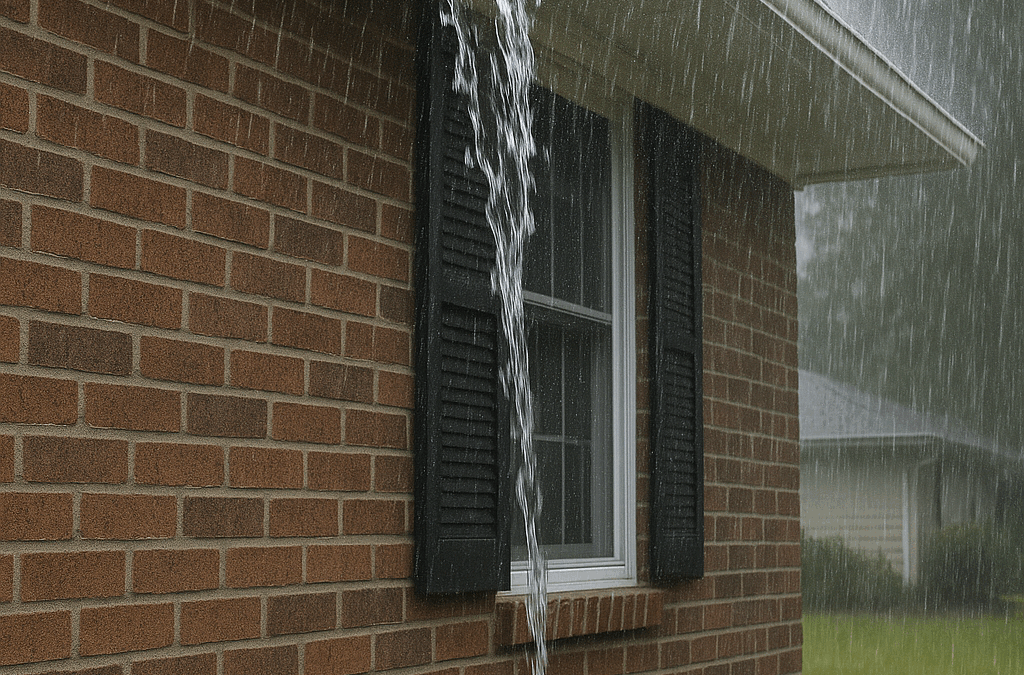
Gutters are the first step in controlling rainwater. They catch water as it flows off the roof and direct it into downspouts, which release it away from the foundation. Without gutters, water drops directly from the roof edge, concentrating in certain areas and causing faster erosion.
In Louisville’s climate—where heavy spring rains and summer storms are common—gutters help slow, guide, and disperse water in a controlled way.
Signs of Poor Rainwater Runoff Around a Home
Homeowners can look for these common indicators of runoff issues:
- Water pooling near the home after rain
- Mud splashes on siding or foundation walls
- Washed-out landscaping or mulch beds
- Cracks in basement walls or floors
- Persistent dampness in crawl spaces or basements
Factors Affecting Runoff in Louisville
Several conditions make runoff management important for local homeowners:
- Seasonal Storms – Louisville often experiences intense rainfall during spring and summer.
- Soil Composition – Clay-rich soils in the area expand when wet and contract when dry, increasing the risk of foundation movement.
- Flat Areas and Low Spots – Slower drainage in some neighborhoods can lead to water pooling near homes.
- Urban Surfaces – Concrete driveways, sidewalks, and patios prevent water absorption, increasing runoff volume.
Common Ways to Direct Rainwater Away from a Foundation
While each property is unique, common runoff management options include:
- Splash Blocks – Disperse water from downspouts to reduce erosion.
- Downspout Extensions – Move water further from the home.
- French Drains – Redirect water underground to a safer location.
- Yard Grading – Ensure the ground slopes away from the foundation.
Landscaping as a Runoff Solution
Strategic landscaping can help slow and absorb water. Rain gardens, permeable walkways, and native plants can make a big difference. In Louisville, native plants such as purple coneflower, black-eyed Susan, and switchgrass are not only attractive but also effective at reducing soil erosion and improving drainage.
Seasonal Considerations for Louisville Homeowners
- Spring – Frequent storms and wet ground increase runoff risk.
- Summer – Short, heavy rain showers can quickly overwhelm drainage systems.
- Fall – Falling leaves can clog gutters, restricting water flow.
- Winter – Freeze-thaw cycles may affect soil stability and drainage patterns.
Conclusion
Rainwater runoff is more than just water moving across your property—it’s a key factor in the long-term stability of your home’s foundation. Understanding how water flows and taking steps to manage it can help reduce the risk of erosion and soil movement.