Louisville, Kentucky homeowners who invest carefully in home maintenance and protection often prioritize roofing, gutters, and siding while an important but frequently overlooked component receives insufficient attention—fascia wrap and trim metal. These formed metal coverings applied over exterior wood roofline components provide long-lasting, low-maintenance protection against the moisture, temperature cycling, and UV exposure that Louisville’s climate delivers throughout every season. Cardinal Gutters recognizes that Louisville-area homeowners benefit from a thorough understanding of fascia wrap and trim metal—what these materials are, how they function, why Louisville’s specific climate makes them particularly valuable, and how they contribute to the overall health and longevity of a home’s roofline and drainage systems.
What Fascia Wrap and Trim Metal Are
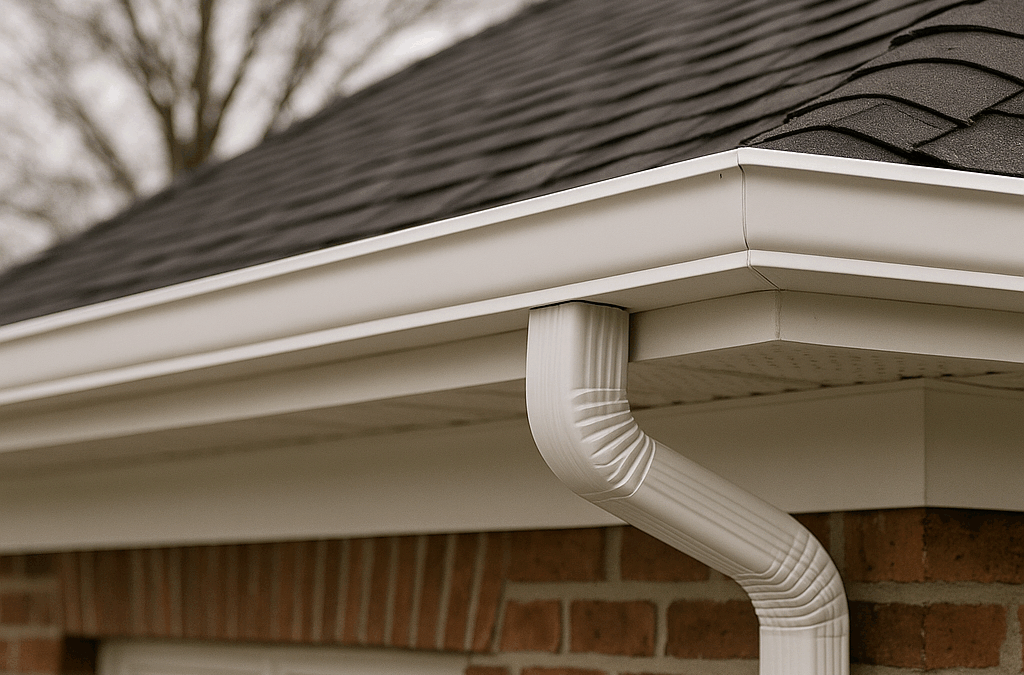
Fascia wrap describes the installation of formed metal cladding—typically aluminum, though steel is sometimes used—over the wood fascia boards that run horizontally along the lower roofline edge behind gutters. These coverings encase the exposed wood in a moisture-resistant metal shell that prevents water from reaching the wood surface, eliminating the primary cause of the rot, paint failure, and structural deterioration that unprotected wood fascia commonly experiences. The process is also called fascia capping, and the installed result creates a clean, durable roofline appearance alongside its functional protective benefits.
Trim metal extends this same protective approach to other exposed exterior wood components. Rake boards along the sloped gable ends of rooflines, corner boards, window trim, door surrounds, and other exterior wood elements can receive similar metal cladding treatment. When fascia wrap and trim metal are discussed together, they describe a comprehensive exterior wood protection strategy using custom-formed metal to cover vulnerable wood substrates throughout the roofline and exterior envelope.
Residential fascia wrap and trim metal are formed from aluminum coil stock ranging from .019 to .032 inches in thickness. This coil stock comes pre-finished in a broad range of colors using factory-applied polymer coating systems engineered for exterior exposure and color stability. Professional installers use sheet metal brake equipment to form flat coil stock into custom profiles that precisely match the dimensions and contours of each component being covered. The resulting fit is specific to each installation, ensuring accurate coverage without gaps that would compromise moisture protection.
How Louisville’s Climate Affects Exterior Wood
Louisville’s humid subtropical climate creates consistently challenging conditions for exterior wood components. The city receives approximately 45 inches of annual precipitation, with rainfall distributed throughout the year and concentrated during spring storm activity. High summer humidity, extended periods of warm temperatures that accelerate biological activity, and the repeated wetting and drying cycles characteristic of Louisville’s weather create conditions where unprotected exterior wood deteriorates measurably faster than in drier or milder climates.
Louisville’s position in the Ohio River Valley creates persistently elevated humidity that affects how quickly moisture evaporates from wood surfaces. Wood that gets wet during rainfall dries slowly in Louisville’s humid air, maintaining elevated moisture content for extended periods after each rain event. This prolonged moisture exposure supports the biological activity—wood-decaying fungi and bacteria—that causes rot. In drier climates, wood might dry between rain events quickly enough to limit biological activity; in Louisville’s Ohio Valley humidity, this reprieve is shorter and less complete.
Seasonal temperature extremes add mechanical stress to UV and moisture challenges. Louisville winters bring regular freezing that causes wood to expand and contract with each freeze-thaw cycle. Paint films applied to wood fascia experience these dimensional changes as the wood substrate moves beneath them, eventually developing cracks that allow moisture penetration. Louisville’s summers bring heat and UV intensity that degrades paint and surface treatments, with paint failure accelerating once UV damage begins. These combined stresses mean painted wood fascia in Louisville typically requires repainting every few years to maintain effective moisture protection—a recurring maintenance burden that metal cladding largely eliminates.
The Structural Importance of Fascia Boards
Fascia boards perform essential structural and protective functions that make their condition directly relevant to the entire roofline system. They close the open ends of roof rafters at the lower roofline edge, preventing moisture from contacting highly absorbent rafter end grain and blocking animal and insect access to roof framing through exposed rafter ends. They provide the primary attachment surface for gutters, accepting the fasteners that support gutter weight and maintain proper alignment and pitch throughout the gutter system’s service life.
The consequences of fascia deterioration extend significantly beyond cosmetic concerns. Rotted fascia progressively loses its ability to hold gutter fasteners, causing gutters to loosen, sag, and eventually separate from the roofline. This fastener failure causes cascading problems—gutters that have pulled away from fascia lose correct pitch, allow water infiltration behind the gutter channel, and ultimately fail to direct water away from the home as designed. Gaps in deteriorated fascia allow moisture to access roof decking and framing, potentially initiating rot that travels along structural members well beyond the visible roofline. Pest access through deteriorated fascia creates pathways for carpenter ants and wood-boring insects to establish activity in roof framing. Understanding these structural dimensions of fascia health clarifies why metal protection represents an investment in roofline longevity rather than simply an aesthetic improvement.
Fascia Wrap as a Long-Term Protection Strategy
Aluminum fascia wrap provides protection fundamentally different from paint-based approaches. Paint creates a surface film requiring periodic renewal as it weathers, degrades, and eventually fails. Metal cladding creates a physical enclosure around the wood substrate that prevents moisture contact independently of any surface coating. Because aluminum does not absorb water, does not support rot organisms, and does not require periodic repainting, properly installed fascia wrap provides durable protection with substantially reduced maintenance requirements compared to painted wood.
Installation quality determines whether fascia wrap delivers its potential protection. The upper edge must integrate correctly with roof drip edge flashing, ensuring water from the roof deck travels over the fascia surface and into the gutter rather than behind the metal cladding. The lower edge must relate appropriately to gutter positioning and attachment. Corner transitions require careful forming and sealing. These integration details require professional skill and attention to produce installations that genuinely protect rather than simply appearing to do so.
Factory-applied coil coatings on aluminum provide color stability and surface durability that significantly exceeds field-applied exterior paints. These industrial coatings are formulated specifically for exterior metal applications, providing UV resistance and surface protection that typically maintains appearance without repainting throughout the system’s service life—a meaningful contrast to the recurring cost and labor of repainting wood fascia every few years.
Identifying Fascia Conditions That Warrant Attention
Louisville homeowners can observe several indicators suggesting fascia condition warrants professional evaluation. Gutters pulling away from the roofline, sagging noticeably, or showing alignment changes often indicate deteriorating fascia reducing fastener holding strength. Paint bubbling, peeling, or significant discoloration on visible fascia surfaces indicates moisture reaching the wood. Soft texture when fascia is pressed manually indicates active rot. Water staining on exterior walls below gutter locations suggests water is escaping from behind or around the gutter and fascia system.
Professional evaluation of fascia condition before installing metal cladding is essential. Deteriorated wood sections should be replaced with sound material before cladding is applied. Enclosing significantly rotted fascia in metal hides developing damage while allowing deterioration to continue and potentially spread to adjacent framing—an outcome worse than leaving problems visible and addressable.
The Relationship Between Fascia Health and Gutter Performance
Gutter system performance depends directly on fascia condition. Gutters attached to sound, properly protected fascia maintain correct positioning, appropriate pitch, and secure attachment throughout their service life. Gutters attached to deteriorating fascia progressively lose all three characteristics as fasteners pull away from weakened wood. This connection means that protecting fascia is not merely a structural or aesthetic concern—it is a prerequisite for sustained gutter system effectiveness. A well-selected and properly installed gutter system attached to deteriorating fascia will ultimately perform poorly regardless of gutter quality, while the same gutter system attached to sound protected fascia can provide decades of effective drainage.
Conclusion
Fascia wrap and trim metal represent a practical, durable approach to protecting a structurally critical but often overlooked component of Louisville, Kentucky homes. Cardinal Gutters understands that Louisville-area homeowners benefit from recognizing the significant role fascia boards play in both roofline structural integrity and gutter system performance, appreciating why Louisville’s Ohio Valley humidity, substantial annual precipitation, seasonal temperature extremes, and UV exposure create particularly demanding conditions for exterior wood, and understanding how properly installed metal cladding provides lasting protection that reduces maintenance requirements while preserving the structural foundation that every effective roofline drainage system depends on throughout years of demanding Louisville weather.