
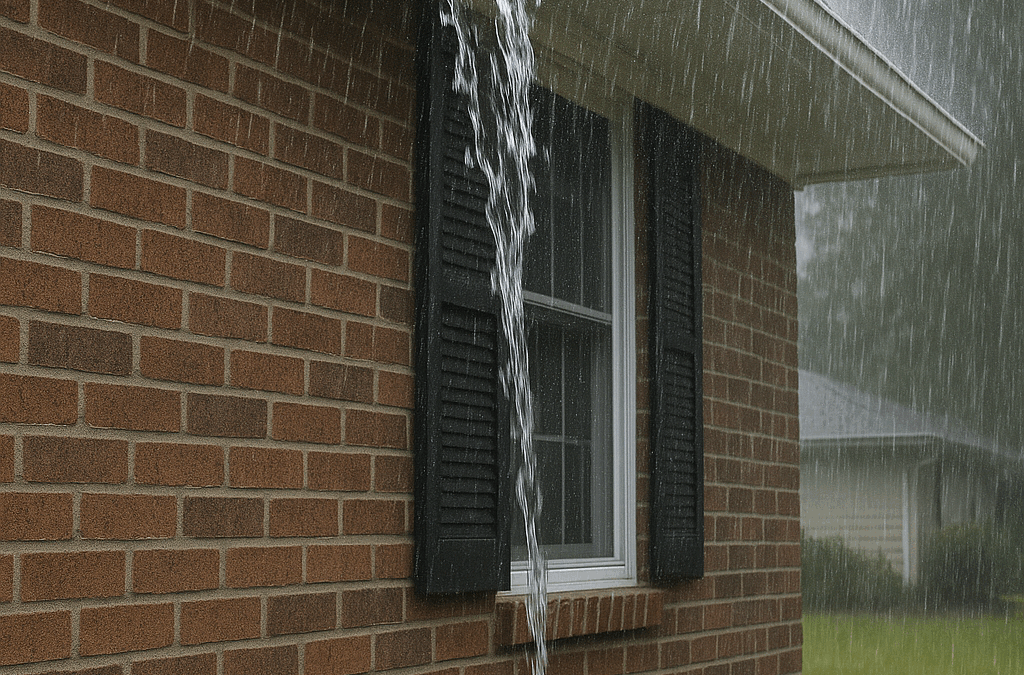
Louisville, Kentucky homeowners who invest in quality gutters and diligent maintenance often assume their drainage systems are performing optimally. What many don’t realize is that gutter performance depends not just on cleanliness and structural integrity, but on a precise alignment factor that’s invisible to casual inspection—gutter slope. The deliberate downward angle at which gutters must be positioned determines whether rainwater flows efficiently toward downspouts or remains standing in gutter channels, causing progressive damage that accumulates out of sight. Cardinal Gutters believes Louisville-area homeowners benefit from understanding gutter slope and pitch—what these concepts mean, why they’re especially important in Louisville’s climate, what problems develop when slope is incorrect, and how this critical factor affects overall drainage system performance throughout a home’s lifetime.
What Gutter Slope and Pitch Actually Mean
Gutter slope describes the intentional downward tilt built into a gutter run from one end to the other. A properly installed gutter is not horizontally level—it’s angled slightly downward in the direction of the nearest downspout, so gravity consistently moves water along the channel toward the drainage outlet. This slope is deliberately engineered into every professional gutter installation, not as an incidental result of attachment but as a calculated performance requirement.
Industry standards call for approximately one-quarter inch of vertical drop for every 10 linear feet of horizontal gutter run. For a Louisville home with a 40-foot gutter section along one roof edge, the downspout end of that section should sit roughly one inch lower than the far end. For longer runs of 60 or 70 feet, which are common on larger homes, some installers split the run with downspouts at each end and slope from the center outward in both directions, achieving proper drainage without creating excessive total slope that would make gutters visibly uneven from the ground.
Gutter pitch and roof pitch are related but distinct concepts worth distinguishing. Roof pitch describes the steepness of the roof plane—typically expressed as inches of rise per horizontal foot—and affects how quickly water travels from ridge to eave. Gutter pitch describes the slope of the gutter channel itself, which professional installers set based on gutter length, downspout placement, and drainage requirements. Both factors influence how quickly water moves through the entire system from roof surface to downspout outlet to ground-level drainage.
Louisville’s Climate Makes Gutter Slope Especially Important
Louisville’s humid subtropical climate with approximately 45 inches of annual precipitation creates conditions where gutter drainage efficiency directly impacts home protection. The city experiences significant spring rainfall combined with periodic intense thunderstorms that deliver large water volumes rapidly. During these high-intensity events, gutters must drain quickly toward downspouts, or overflow is unavoidable. When gutters lack adequate slope, even a well-maintained, debris-free system may overflow during Louisville’s heaviest rainfall events because water cannot reach downspouts fast enough.
Louisville’s four distinct seasons create particularly varied demands on gutter systems. Spring brings the year’s heaviest and most intense rainfall along with organic debris from flowering trees. Summer delivers thunderstorm activity with occasional heavy downpours. Autumn produces significant leaf fall from Louisville’s substantial deciduous tree population. Winter brings freeze-thaw cycling that physically affects gutter alignment and can cause water pooling in gutters to form ice. This seasonal variety means gutter slope must support effective drainage under diverse conditions throughout the entire year.
The Ohio River Valley geography that defines Louisville’s setting creates locally elevated humidity that affects how quickly moisture evaporates from surfaces. Any water that fails to drain from gutters due to inadequate slope remains in a humid environment where it evaporates slowly, maintains biological activity, and creates prolonged moisture exposure for gutter components and adjacent building materials. Wood fascia boards subjected to this chronic moisture exposure deteriorate substantially faster in Louisville’s Ohio Valley humidity than in drier climates.
Louisville’s winters, while moderate compared to northern cities, bring regular freezing periods that make standing water in gutters particularly problematic. Water that pools in gutters due to insufficient slope can freeze during cold periods, expanding as it does so. Ice forming inside gutter channels pushes outward against gutter walls and downward against the gutter profile, gradually deforming the cross-section and stressing the fasteners that maintain alignment. Ice at gutter edges can also contribute to ice dam formation at roof perimeters, potentially forcing meltwater backward underneath shingles.
Problems That Develop from Inadequate Slope
Chronic Standing Water: The most immediate consequence of insufficient gutter slope is persistent standing water. Rather than draining completely after rainfall, gutters with inadequate pitch retain pools of water that remain until evaporation—a slow process in Louisville’s humid climate. This standing water accelerates corrosion in metal gutters, continuously degrades sealant compounds at joints and corners, and provides permanent habitat for biological growth including algae, moss, and mosquito larvae.
Compounding Debris Problems: Standing water makes debris accumulation significantly worse. Leaves and organic material floating in standing water decompose into fine sludge rather than remaining loose and potentially washing out during rainfall. This decomposed organic sediment packs into gutter channels and downspout entrances, creating blockages that further reduce drainage capacity. The combination of poor slope and resulting debris accumulation creates a progressively worsening drainage situation.
Structural Gutter Damage: Gutters supporting persistent standing water and debris loads bear more weight than they’re designed to handle continuously. Standard gutter systems installed at typical hanger spacing are not engineered for constant heavy loads. Over time, excessive weight causes hanger fasteners to pull away from fascia, creating low spots in the gutter run where slope reverses—causing water to collect at points opposite to downspout locations. This progressive sagging compounds slope problems and accelerates structural failure.
Fascia and Soffit Deterioration: Gutters overflowing due to slope-related drainage problems direct water against fascia boards and soffit panels with every rainfall event. Louisville homeowners often discover the consequences of this chronic water exposure only when paint failure or obvious rot becomes visible—by which point significant structural deterioration has typically already occurred within the wood.
Foundation and Crawl Space Issues: Water overflowing gutters due to poor slope concentrates at the foundation perimeter rather than being directed through downspouts to appropriate discharge points away from the home. This concentrated perimeter moisture creates hydrostatic pressure against foundation walls, contributes to crawl space moisture and mold problems, and in Louisville’s clay-heavy soils, can cause soil expansion and movement that stresses foundation structures.
How Correct Slope Is Established and Maintained
Professional installers use chalk lines, levels, and careful measurement to establish proper slope before fastening gutters. A chalk line snapped from the high end of a gutter run to the planned downspout location at the calculated drop provides an installation reference ensuring consistent slope throughout the run. Hangers are then positioned along this reference line, creating uniform support that maintains slope across the full gutter length.
Hanger quality and spacing significantly affect how well slope is maintained over time. Higher-quality hangers with greater fastener contact area distribute load more effectively and resist gradual pullout under repeated loading. Appropriate spacing—typically every 24 to 36 inches—provides sufficient support to prevent profile sagging between attachment points. Gutters installed with insufficient hanger density may maintain correct slope initially but develop sag and slope reversal relatively quickly under normal service loads.
Maintaining slope over a gutter system’s service life requires periodic professional inspection, particularly after severe weather events and after several years of service when cumulative fastener loosening and wood movement begin affecting alignment. Early identification and correction of developing slope problems prevents the compounding deterioration that makes problems increasingly expensive to address.
Signs That Slope May Be Problematic
Louisville homeowners can watch for indicators of slope problems in their gutter systems. Visible sagging—gutter sections that dip noticeably below the roofline slope or form obvious low points away from downspout locations—is the most obvious indicator. Water staining on exterior walls below gutter locations, particularly horizontal staining patterns, suggests chronic overflow associated with drainage problems. Gutters that continue dripping or producing water sounds long after rainfall ends likely contain standing water draining slowly through inadequate slope.
During rainfall, observing water movement inside gutters—looking for sluggish flow or water pooling in mid-run rather than moving consistently toward downspouts—reveals slope performance in real time. After rainfall, checking gutters for standing water within a short period of storm cessation identifies drainage problems. Increased mosquito activity near rooflines during warm months without other obvious breeding sources can suggest standing water in gutters above.
Conclusion
Gutter slope and pitch represent the invisible engineering foundation upon which effective gutter drainage depends—a factor that determines whether Louisville, Kentucky homes receive the water protection that quality gutters are capable of providing. Cardinal Gutters recognizes that Louisville-area homeowners benefit substantially from understanding this foundational concept, from appreciating why Ohio Valley humidity, substantial annual rainfall, and seasonal temperature extremes make correct slope particularly consequential, and from knowing how to recognize when slope problems may be developing before they lead to expensive damage. The combination of precise installation, quality materials, appropriate hanger support, and periodic professional assessment gives gutter systems the best opportunity to maintain the correct slope that protects Louisville homes throughout decades of varied and demanding seasonal weather.