
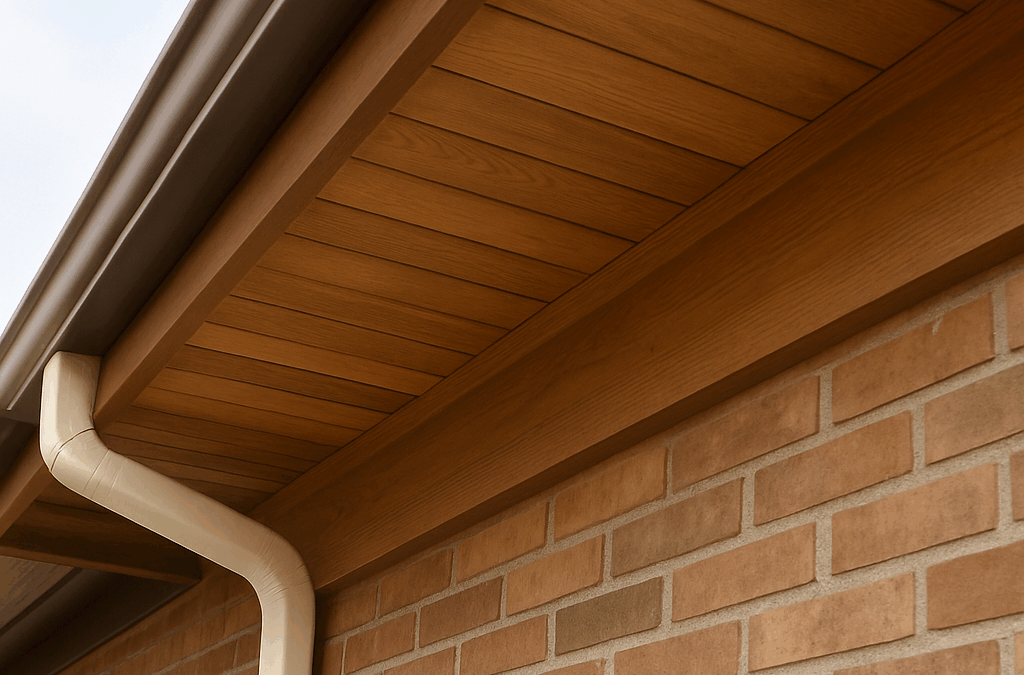
Many Louisville, Kentucky homeowners pay close attention to their roofs, siding, and gutters while overlooking another critical exterior component visible from ground level—the soffit. This horizontal surface beneath roof overhangs serves important functions that affect home protection, energy efficiency, and appearance. Cardinal Gutters regularly discusses wood soffit with Louisville-area property owners who often don’t realize how this architectural element impacts their home’s overall health. Comprehensive knowledge about wood soffit—its purpose, regional vulnerabilities, and maintenance requirements—helps homeowners make better decisions about exterior care and preservation.
Understanding What Wood Soffit Is
Soffit refers to any material installed on the underside of an architectural overhang. On residential structures, this most commonly describes the horizontal surface beneath roof eaves where the roof extends beyond exterior walls. Standing outside and looking upward at your home’s eaves, the material spanning between the exterior wall and the fascia board at the roof edge is the soffit. When constructed from lumber materials—solid wood boards, plywood, or engineered wood products—this component is specifically termed wood soffit.
Wood soffit serves both aesthetic and functional purposes in residential construction. From an appearance standpoint, soffit creates a finished, professional look by concealing roof framing members, rafter tails, and the underside of roof sheathing that would otherwise remain visibly exposed. This contributes significantly to curb appeal and architectural completeness, giving homes a polished rather than unfinished appearance.
Functionally, soffit provides critical services. It closes the gap between the roof structure and exterior walls, preventing wildlife from accessing attic spaces through open eave areas. Without proper soffit, birds nest in rafters, squirrels enter attics easily, and insects colonize unprotected cavities. Equally important, soffit facilitates controlled attic ventilation through vented or perforated sections. These ventilation openings allow fresh air to enter attics at the eaves while hot air escapes through ridge vents or gable vents, creating air circulation that reduces heat accumulation, controls moisture levels, and prolongs roofing material lifespan.
Wood soffit installations vary in style and configuration. Traditional approaches use individual tongue-and-groove boards installed perpendicular to the building wall. Panel systems employ sheets of plywood or similar materials cut to fit eave dimensions. Some installations feature decorative profiles like beadboard patterns that enhance visual appeal and complement specific architectural styles common in Louisville’s diverse housing stock.
How Louisville’s Climate Affects Wood Soffit
Louisville experiences a humid subtropical climate that creates specific challenges for wood soffit performance and longevity. Summers are hot and humid, with July temperatures averaging in the mid-80s and relative humidity frequently exceeding 70%. Winters bring cold temperatures, precipitation, and freeze-thaw cycling. The city receives approximately 45 inches of annual rainfall, meaning wood soffit faces regular moisture exposure throughout the year.
Wood is a hygroscopic material, naturally absorbing and releasing moisture in response to ambient humidity levels. In Louisville’s humid environment, wood soffit continuously absorbs atmospheric moisture during humid periods, causing the material to swell dimensionally. When drier conditions arrive—whether from seasonal changes or indoor climate control—wood releases moisture and shrinks. This constant expansion and contraction cycle occurs repeatedly throughout each year, gradually weakening wood structure, loosening fasteners, and creating cracks or gaps.
Persistent moisture creates ideal conditions for biological growth and decay. Mold and mildew colonize damp wood surfaces, creating unsightly discoloration while gradually degrading wood fibers. More destructively, wood-decay fungi establish colonies in moisture-saturated wood and decompose cellular structures, causing rot that compromises structural integrity. Louisville’s combination of moisture availability and moderate temperatures provides perfect conditions for these decay organisms to thrive.
Insect activity adds another dimension to climate-related soffit problems. Carpenter bees are common throughout the Louisville area, boring distinctive circular holes into wood soffit to create nesting galleries. Termites, prevalent in Kentucky, can infest wood soffit when moisture damage creates favorable conditions. Various wood-boring beetles and other insects similarly exploit vulnerable wood components, creating damage pathways and accelerating deterioration processes.
Wood Soffit Maintenance Essentials
Effective wood soffit preservation requires ongoing attention to protective coatings and underlying material condition. Regular inspection forms the foundation of maintenance programs. Louisville homeowners should examine soffit at least annually, checking for coating deterioration, discoloration, warping, pest damage, or moisture-related problems. Areas beneath gutters and downspouts warrant particular scrutiny due to greater water exposure.
Coating maintenance dramatically extends wood soffit service life. Quality exterior paints or solid stains create moisture barriers when properly maintained. Most coatings need renewal every 5-8 years depending on exposure, product quality, and application methods. Recoating involves cleaning surfaces thoroughly, scraping loose paint, sanding rough spots, priming exposed bare wood, and applying finish coats per manufacturer specifications.
Cleaning removes biological growth and prevents permanent staining. Washing with mild detergent solutions and soft brushes effectively removes mold, mildew, and dirt without damaging wood or finishes. Pressure washing provides efficient cleaning but requires caution—excessive pressure damages wood fibers, forces water into hidden spaces, or strips paint aggressively. When pressure washing, use low settings, wide spray patterns, and avoid directing spray upward into vents.
Ventilation maintenance ensures proper airflow through vented soffit sections. Vents can become blocked by insect nests, dust accumulation, spider webs, or paint during recoating projects. Obstructed vents reduce attic ventilation, increasing heat and moisture that accelerate roof aging and promote wood decay. Periodically verify that vents remain open and functional.
Prompt minor repairs prevent major problems. Fill small cracks with exterior-grade wood fillers or caulks. Refasten loose boards with corrosion-resistant fasteners. Treat limited early-stage rot areas with consolidants, then fill and refinish, though extensive rot requires replacement.
When to Repair or Replace Wood Soffit
Deciding between repair and replacement depends on damage extent, overall condition, and economics. Localized damage affecting limited areas often makes targeted replacement practical. Widespread deterioration throughout the system typically warrants complete replacement for uniform appearance and performance.
Replacement requires material decisions. Matching original wood profiles maintains authentic appearance but may be difficult for older homes with custom millwork. Some homeowners choose modern alternatives like vinyl or aluminum soffit offering superior weather resistance and minimal maintenance, though this alters the home’s character.
Professional installation ensures proper ventilation, adequate fastening, and correct flashing details preventing moisture problems. Soffit replacement often coordinates with gutter installation, fascia repair, or roofing projects since these systems interconnect. Addressing related components simultaneously provides comprehensive protection and may reduce overall costs.
Wood Versus Alternative Soffit Materials
Comparing wood soffit with alternatives provides context. Vinyl soffit offers excellent moisture resistance, requires no painting, and resists decay and insects, though it can become brittle and crack over time with limited color options. Aluminum soffit provides durability and fire resistance but costs more and can dent. Fiber cement soffit combines attractive appearance with superior weather resistance but weighs more and costs significantly more than wood.
Wood soffit, despite maintenance needs, offers aesthetic warmth and architectural authenticity that synthetics cannot perfectly replicate. For Louisville historic homes or properties where original character matters, properly maintained wood soffit preserves integrity that modern alternatives might compromise.
Conclusion
Wood soffit represents an essential protective and aesthetic component of Louisville, Kentucky homes that often receives insufficient attention until problems emerge. Cardinal Gutters understands that Louisville homeowners equipped with knowledge about wood soffit’s functions, climate-related vulnerabilities specific to the region, and maintenance requirements can better preserve this important architectural element. While wood soffit demands more care than modern synthetic alternatives, proper maintenance practices, timely repairs, and informed replacement decisions when necessary enable Louisville-area property owners to protect their homes while maintaining the authentic character that wood architectural components provide to residential structures throughout the community.