Wood soffits contribute both function and charm to many Louisville residences, concealing eave framing while supporting attic ventilation and exterior appearance. Louisville’s climate—with humid summers, freezing winters, and heavy spring rains—creates specific demands on wood soffit assemblies. This informational article from Cardinal Gutters in Louisville, KY, explains what wood soffits are, why they matter locally, common problems and risks, and practical homeowner steps for evaluating, maintaining, and responsibly replacing wood soffits.
Understanding wood soffits
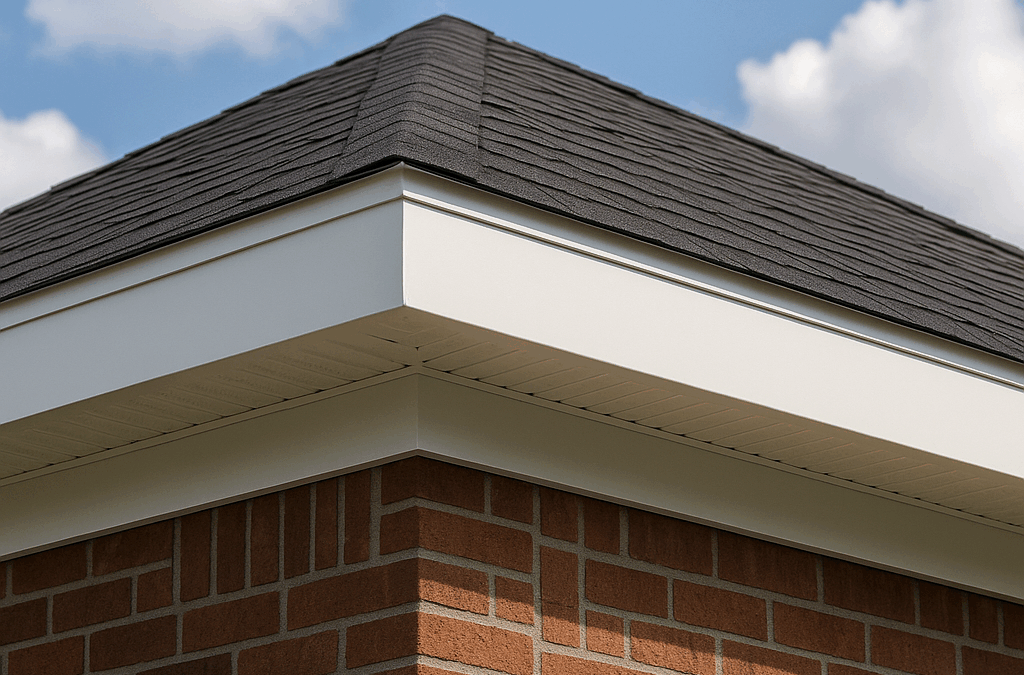
A soffit forms the underside of an eave, bridging the gap between the fascia and the exterior wall. Typical materials include cedar, pine, and engineered boards; soffits may be vented to permit attic intake airflow. Wood soffits are valued for their appearance and can be stained or painted to fit a home’s architectural style, but they require attentive care in Louisville’s variable climate.
Why Louisville’s climate affects soffits
Louisville experiences full seasonal cycles: wet springs with heavy rains, humid summers that increase biological activity, and winter freeze-thaw cycles that stress finishes and joints. Moisture exposure, repeated wet-dry cycles, and potential ice formation on eaves can compromise wood fibers and paint. Homes shaded by trees face additional moisture retention from leaf litter and reduced sun exposure, accelerating localized decay.
Common mechanisms of failure
- Water penetration from clogged gutters, improperly integrated flashing, or roof leaks.
- Excess attic humidity or air leakage leading to condensation on soffit backs.
- Insect damage—termites or carpenter bees can undermine wood members.
- Mechanical trauma from storms or lawn equipment.
- Deterioration of paint or sealant allowing moisture to enter wood grain.
When to repair vs. when to replace
Spot repairs are often effective for limited rot: remove damaged sections, treat adjacent wood, and replace boards with matching profiles. Complete soffit replacement is warranted if multiple boards or supporting rafters are compromised, if the soffit system cannot be properly ventilated, or if homeowners prefer a less maintenance-intensive material. Replacing with alternative materials such as fiber-cement or aluminum can reduce future maintenance but may alter historic appearance.
Practical, non-promotional advice for homeowners
- Inspect thoroughly: Use a small probe to test suspect areas for softness; check for paint blistering, stains, or gaps at the eave.
- Resolve moisture sources first: Repair gutter function, extend downspouts away from the foundation, and verify roof flashing at intersections and valleys.
- Improve attic sealing and ventilation: Seal attic bypasses where conditioned air escapes and confirm intake/exhaust vent balance to limit condensation.
- Make careful repairs: Use treated or rot-resistant wood for replacements; ensure proper flashings and backer boards to stop water intrusion.
- Maintain protective finishes: Repaint or restain as needed using exterior-grade coatings suited for humid climates; address failing paint early.
- Consider non-wood alternatives where appropriate: For chronic moisture sites, select materials designed to tolerate persistent dampness and evaluate aesthetic trade-offs.
- Consult pest specialists for insect evidence: Active infestations should be addressed before cosmetic repairs.
- Schedule seasonal checks: Inspect after spring storms and late fall leaf drop to catch issues before freeze-thaw damage occurs.
Installation details that prolong lifespan
- Correct drip edge and flashing integration prevents water from running behind soffit boards.
- Allow recommended ventilation gaps—fully sealing soffits can trap moisture and cause unseen rot.
- Use stainless or coated fasteners and compatible sealants to prevent corrosion and joint breakdown.
Conclusion
Wood soffits are an important architectural and functional element on many Louisville homes. Cardinal Gutters of Louisville, KY, encourages homeowners to prioritize root-cause diagnosis—identify and stop moisture and pest pressures first—then perform targeted repairs or consider replacement when damage is extensive. With proper inspection routines, attention to ventilation, and sound repair practices, Louisville property owners can protect soffits from the region’s demanding seasonal conditions while preserving their home’s character.