
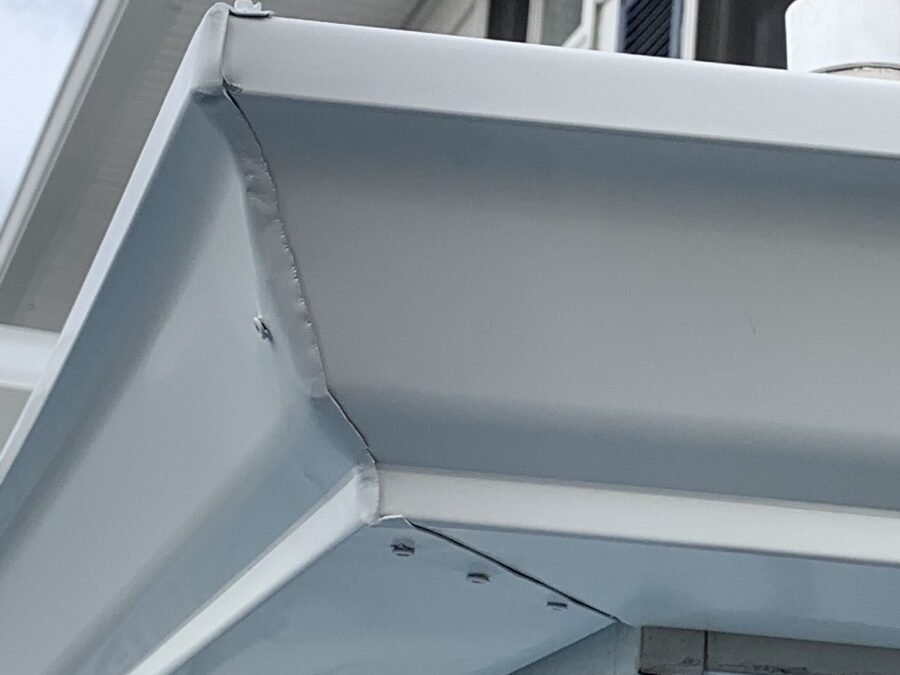
Gutters must follow the shape of a roofline, and most homes have corners where water needs to move from one gutter run into another. The angled pieces that create these turns are called gutter miters. Whether the corner faces inward or outward, the miter is an important part of the drainage system because it must direct water through a change in direction without leaking. Over time, sealant, support hardware, gutter alignment, debris accumulation, and Louisville’s seasonal weather can affect these connections. Cardinal Gutters believes Louisville, Kentucky homeowners benefit from knowing how inside and outside miters work, why they are common leak locations, and what warning signs may indicate a corner needs closer inspection.
What Are Inside and Outside Miters?
A miter is the shaped corner section that connects gutter channels at a roofline turn. It allows water to continue moving through the system instead of stopping at a wall corner.
An outside miter wraps around a corner that projects outward. It is often found where two exterior walls meet or around architectural features such as bump-outs and bay windows.
An inside miter joins gutters at an inward-facing corner. These may be found where two roof sections meet around an addition, a covered porch, an L-shaped home, or another recessed roofline.
Some gutter systems use preformed miter pieces, while others use custom-fabricated connections. The appearance may vary, but the function remains the same: create a water-tight transition from one gutter direction to another.
Why Mitered Corners Are Vulnerable
A long seamless gutter section has fewer joints than a sectional system, but corners still require a connection. That connection must remain sealed while managing flowing water, debris, temperature movement, and physical stress.
Louisville’s rainfall patterns can reveal weak miter joints. A miter may not drip during a light shower, but it may leak during a heavy Ohio Valley storm when water flows rapidly through the gutter. The increased volume pushes water against the seam and can expose small gaps in sealant or alignment.
Seasonal temperature changes also matter. Louisville experiences hot and humid summers, cold winters, and meaningful freeze-thaw cycling. Aluminum gutters expand and contract as temperatures shift. Sealant and joints must accommodate that movement over time. Repeated seasonal cycling can gradually cause sealant to crack, shrink, or separate.
Ice can create another stress factor. If debris or standing water collects near a gutter corner, that water may freeze during winter weather. The added weight of ice can pull on hangers, flex the gutter channel, and place additional stress on the miter connection.
Inside Miters and High-Volume Drainage Areas
Inside miters are often located where roof geometry concentrates runoff. A roof valley may direct water from two roof planes into a gutter near an inside corner. During strong rainfall, this can create a high-volume flow zone.
Homeowners may observe water overflowing from an inside corner during storms. While a failed miter seam can cause dripping, front-edge overflow often indicates that water is entering the area faster than it can move through the channel. Possible contributors include debris buildup, a blocked downspout, inadequate slope, or an unusually concentrated roof valley flow.
Louisville’s spring and summer storms can produce intense rain in a short period, while late fall and winter can bring longer periods of steady rainfall. Both types of weather test inside miter areas differently. Intense rain tests the channel’s ability to carry high volumes quickly. Sustained rain tests whether the gutter and downspout can remain clear and drain consistently over time.
Outside Miters and Repeated Corner Drips
Outside miters are commonly associated with visible drips. A homeowner may see water falling from the bottom of a gutter corner, leaving vertical stains on siding or brick below. In some cases, water may collect in landscaping and wash out mulch or soil at the base of the wall.
Repeated corner drips matter because the water is concentrated in one location. A small leak may release only a limited amount during one storm, but frequent rain can cause cumulative moisture exposure. Louisville homes with basements should pay attention to concentrated discharge near foundation walls, since persistent saturation around the home can contribute to wet-ground conditions near below-grade areas.
Outside miter leaks may also lead to fascia deterioration if water escapes behind the gutter. The fascia board supports gutter hangers, so moisture damage in this area can eventually weaken the support system and create additional alignment problems.
Signs That a Gutter Miter May Be Leaking
A miter issue may be identified by observing the gutter after rain. Homeowners should look for recurring patterns at roofline corners.
Common signs include:
- Water dripping from the bottom or back of a miter
- Dark staining on trim, siding, or brick below a corner
- Mineral deposits beneath a seam
- Cracked or missing sealant
- Gaps between connected gutter sections
- Overflow occurring near an inside corner
- Debris lodged at a roofline turn
- Sagging near the corner
- Peeling paint or soft wood on the fascia behind the connection
- Erosion, bare soil, or displaced mulch below a gutter corner
Water stains can sometimes be mistaken for ordinary dirt, particularly on older homes. The key is whether they recur in a vertical pattern directly below a gutter connection or become more noticeable after rainfall.
The Importance of Proper Hanger Support
A miter connection should be supported so the gutter channels remain aligned. If a gutter section sags near the corner, the miter may twist or pull against its sealant. Loose or missing hangers can allow movement that gradually opens a seam.
Support is especially important near roof valleys and inside corners. These areas may carry more water and debris than straight sections. Louisville homes beneath mature trees may also experience heavy leaf buildup near corners, adding weight that can stress gutter hardware.
The condition of the fascia board matters as well. A screw or hanger can only hold securely if the fascia behind it remains sound. If chronic overflow or leakage has softened the fascia wood, hardware may pull loose and cause corner misalignment.
Debris Accumulation at Corners
Leaves, twigs, shingle granules, seed pods, and organic sediment do not always move smoothly through a gutter. At a corner, water changes direction and debris may slow down. This makes miters common collection points, especially when the system has limited slope or a partially blocked downspout.
Louisville’s mature canopy produces varied debris, including large leaves, acorns, walnuts, sycamore seed balls, and small branches. Once wet, this debris may compact near a miter and restrict flow. It can also hold moisture against the gutter surface and conceal an existing seam leak.
Fall cleaning should include clearing debris from all corners, downspout outlets, and roof-valley discharge areas. A gutter may look clean from the ground while still holding compacted material in an inside miter or at a downspout opening.
Sealant Repairs and Long-Term Performance
Sealant is often used to create a watertight barrier at gutter miters. For it to work correctly, the joint should be clean, dry, and stable. Old sealant, debris, oxidation, and moisture can prevent new material from bonding effectively.
Sealant should also be viewed as one part of miter maintenance, not the only consideration. If the gutter is pulling away from the fascia, sagging under debris, or misaligned because of damaged support hardware, simply adding sealant may not address the condition causing the leak.
Conclusion
Gutter miters are essential connections that guide roof runoff around inside and outside corners of a Louisville home. Because these corners are sealed joints and often handle concentrated water flow, they are common locations for leaks, debris buildup, and support-related problems. For Cardinal Gutters and Louisville, Kentucky homeowners, watching for corner drips, staining, failed sealant, sagging, overflow, and erosion below roofline turns can provide useful information about gutter condition. Regular cleaning and inspection of these small but important connections can help homeowners better understand how their drainage system is managing Ohio Valley rainfall, seasonal debris, and winter weather.