
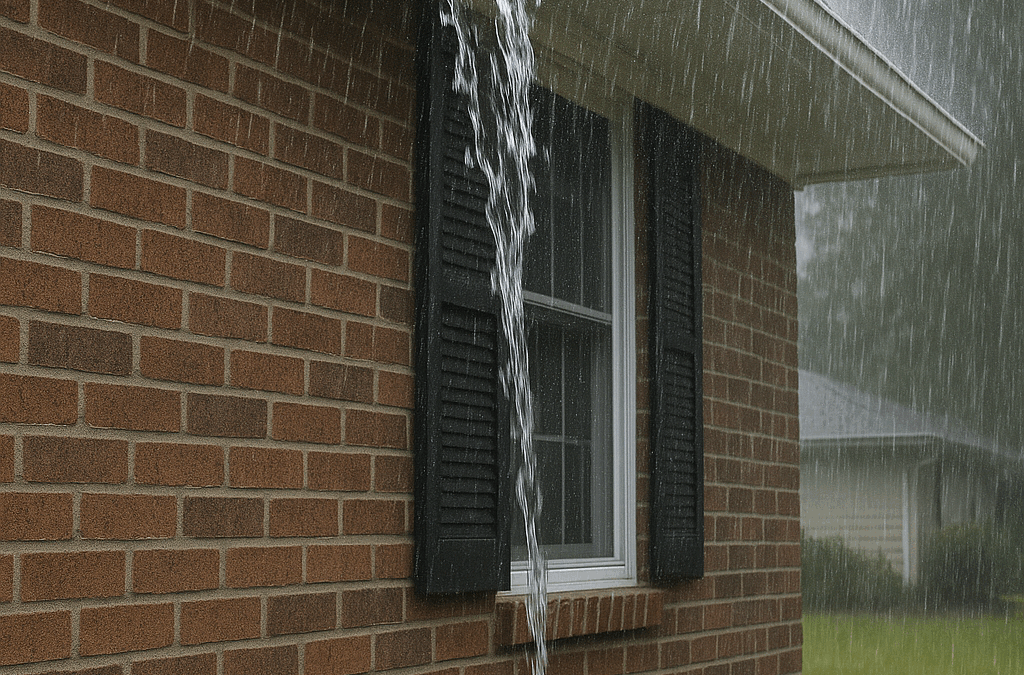
A gutter may look like a simple channel, but its performance depends on how several roof-edge components meet. When rainwater appears between the back of the gutter and the fascia board, that transition is no longer directing all visible runoff into the channel. The cause may be related to drip edge, gutter position, a drainage restriction, or the condition of the fascia itself.
Louisville’s changing seasons make the symptom worth noticing. Repeated rain can expose a small gap, falling debris can restrict the channel, and colder weather can place additional stress on materials that were already loose or wet. The visible drip does not identify a single automatic solution, but it does show that the complete water path deserves attention.
The Roof Edge Is a Connected System
At the bottom of a sloped roof, water needs to move cleanly from the roofing surface into the gutter. Drip edge is metal flashing installed along the roof edge to help direct water away from vulnerable edges and vertical surfaces. A gutter apron may help span the transition toward the gutter.
Below that transition is the fascia, which finishes the roof edge and often provides the surface to which residential gutters are attached. The gutter receives runoff and carries it toward downspouts.
If the flashing, gutter, or fascia is out of position or in poor condition, water can take a different route. It may cling to an edge, move through a narrow gap, or travel down the fascia. This is why simply sealing the first visible opening may not address the condition that created the water path.
Why Water May Travel Behind a Gutter
The drip edge or gutter apron does not carry runoff into the channel
The transition needs to place water where the gutter can receive it. If flashing is absent, damaged, too short for the arrangement, or separated from the gutter, runoff may reach the fascia first. Roof construction varies, so the correct configuration depends on the components already present.
The gutter is pulling away
Fasteners and hangers keep a gutter aligned along the eave. When a section shifts outward, the space behind it can grow large enough for runoff to pass through. A wavy gutter line, visible fasteners, or a widening gap may be noticeable from the ground.
The channel is filling faster than it drains
Leaves, twigs, seed pods, roof granules, and compacted organic material can reduce water flow. A partially blocked downspout may produce the same effect. Once the water level rises, it may spill over the back as well as the front, making an overflow problem appear to be a flashing problem.
The gutter has a low point
Gutters use a small amount of pitch to move water toward outlets. A sagging or uneven section may hold water and overflow at one location. After a storm, standing water or a consistently wet debris line may indicate that flow is not reaching the downspout evenly.
The fascia is no longer providing firm support
Wood fascia exposed to recurring moisture may stain, peel, soften, or decay. If the mounting material weakens, attachments may loosen and gutter alignment may change. In that situation, the water behind the gutter and the fascia condition are part of the same roof-edge concern.
What to Look for During and After Rain
A safe ground-level check can provide helpful clues. During rainfall, note where the water first becomes visible. After conditions are dry, look for evidence that remains.
Common signs include:
- A narrow stream between the gutter and fascia
- Dark vertical lines below hangers or fasteners
- Peeling paint or discolored wood behind the gutter
- A gutter run that is no longer straight
- Water spilling near an inside or outside corner
- Dampness or staining on the soffit below
- Overflow near a downspout that appears slow or obstructed
- Water marks below a roof valley where runoff is concentrated
Do not climb onto a wet roof or ladder to look for the source. The location, timing, and appearance of the water can be documented from a safe position for later discussion.
Water Behind the Gutter Versus Water Over the Gutter
The difference can help narrow the likely area of concern.
When water moves over the front edge, the gutter may be receiving runoff but unable to move it away quickly enough. Debris, a downspout restriction, a low point, or the amount of water reaching one section may be relevant.
When water moves between the gutter and fascia before the channel fills, the roof-edge transition or gutter position may deserve more attention. When both happen at once, more than one condition may be involved.
Louisville homeowners should also remember that a symptom can change with rainfall intensity. A modest rain may not reveal a partial restriction or narrow gap that becomes obvious during a stronger storm.
Does the Entire Gutter Need to Be Replaced?
Water behind one section does not establish that a complete replacement is necessary. The appropriate service depends on what is directing the water and whether the supporting materials remain sound.
Debris-related overflow may point toward cleaning and drainage. A gap at the roof edge may make the gutter apron or drip edge relevant. Deteriorated mounting wood raises a separate fascia question. Broader gutter condition or alignment problems may require the gutter system itself to be considered. A visible drip alone does not determine which response, if any, is appropriate.
Why the Fascia Should Not Be Overlooked
Because gutters often conceal part of the fascia, moisture-related changes may develop behind the channel before they are easy to see. Staining at the bottom edge, paint failure, loose fasteners, or a gutter that repeatedly shifts can be useful warning signs.
Fascia repair or replacement and fascia wrap are different types of work. Repair or replacement addresses the wooden board. Fascia wrap adds metal trim over fascia. If the underlying wood has deteriorated, its condition should be considered separately from the exterior covering.
Frequently Asked Questions
Why does water run behind my gutter only in certain places?
The gap, gutter position, roof shape, debris load, and runoff volume can vary along one eave. Roof valleys and corners may also direct more water into a short section, making the symptom localized.
Will gutter cleaning stop water from reaching the fascia?
It may help if a clog is causing the channel to fill. Cleaning would not necessarily address missing flashing, a gap at the roof edge, a shifted gutter, or weakened fascia. The behavior of the gutter during rain helps show whether restricted flow is involved.
Can fascia wrap cover damaged wood?
Fascia wrap is a finishing and protective metal covering, not a determination that the wood beneath it is structurally sound. Wood condition should be considered before deciding how to address the exterior surface.
Can seamless gutters still have water behind them?
Yes. Seamless gutters reduce intermediate joints along straight runs, but roof-edge flashing, alignment, pitch, downspout flow, and fascia condition still affect whether water enters the channel correctly.
Should I add sealant behind the gutter?
Sealant has uses within gutter systems, but applying it without locating the source may not correct an alignment, flashing, drainage, or wood-condition problem. The water path should be understood before selecting an approach.
Pay Attention to What the Rain Is Showing You
Water between the gutter and fascia is evidence that some runoff is not following the intended route. The source may be relatively limited, or several roof-edge conditions may be contributing. Looking at the flashing, gutter position, drainage, and fascia as one assembly provides a more useful starting point than assuming every drip has the same cause.