Louisville, Kentucky homeowners managing the ongoing demands of home exterior maintenance frequently encounter wood soffit as a component requiring periodic attention. Positioned beneath the roof overhang along the home’s eaves, wood soffit is exposed to the moisture, temperature cycling, biological activity, and UV radiation that Louisville’s four-season climate delivers year-round. Understanding wood soffit—what it does, why it deteriorates, and what warning signs indicate repair or replacement may be needed—helps Louisville homeowners make informed decisions about protecting this important component of the roofline system. Cardinal Gutters recognizes that comprehensive homeowner knowledge about wood soffit contributes to better maintenance decisions and more effective long-term home protection.
What Wood Soffit Is and Why It Matters
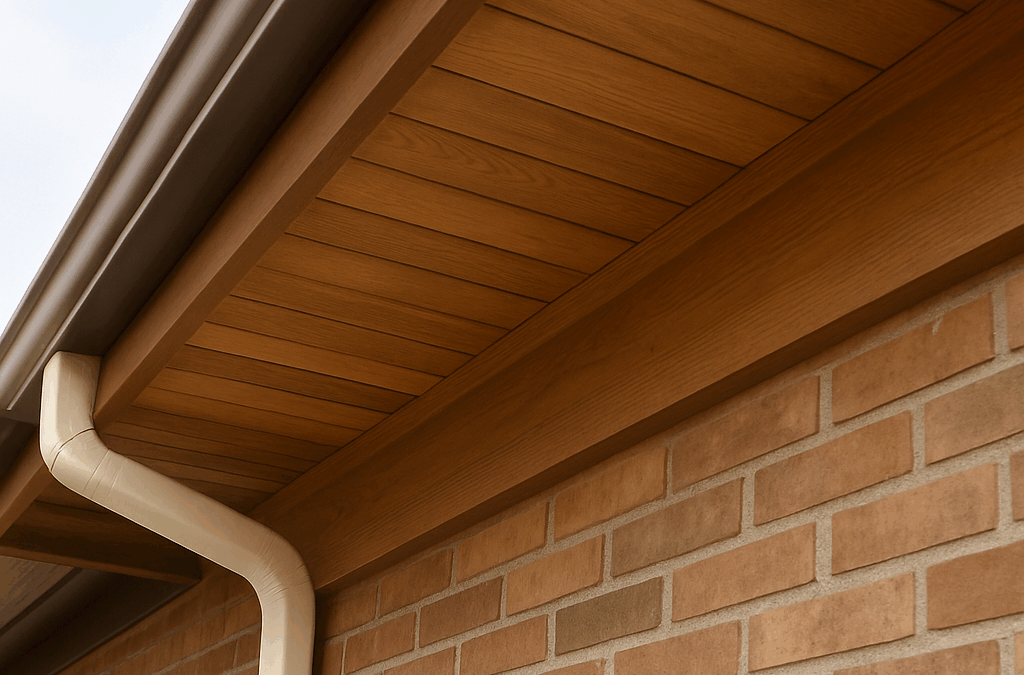
Soffit is the finishing material applied to the underside of the roof overhang—the horizontal surface visible beneath the eaves between the exterior wall and the fascia board at the roof edge. Wood soffit, whether constructed from boards, plywood panels, or tongue-and-groove materials, encloses the open eave space that would otherwise expose roof rafters and framing to the exterior. This enclosure serves functional purposes that directly affect both roof system health and home protection.
Attic ventilation represents wood soffit’s most critical functional contribution. Vented soffit panels—wood soffit incorporating perforated panels or vent strips—admit outside air into the attic from below, creating the airflow that attic ventilation systems require. In Louisville’s climate, adequate attic ventilation prevents summer heat accumulation that accelerates shingle aging and increases cooling costs, prevents winter moisture buildup in the attic that damages roof decking and framing through condensation, and reduces the risk of ice dam formation at roof edges during Louisville’s freeze periods by maintaining more uniform roof surface temperatures.
Soffit also provides the physical barrier that excludes wildlife from the protected eave and attic space. Louisville’s residential environments support active populations of birds, squirrels, raccoons, bats, and wasps—all of which will exploit openings in soffit to access the sheltered, insulated attic space. Intact soffit in good condition forms part of the pest exclusion envelope that protects attic insulation, electrical wiring, and structural components from wildlife damage and contamination.
How Louisville’s Climate Affects Wood Soffit
Louisville’s position in the Ohio River Valley creates a humid climate where exterior wood faces sustained moisture exposure and slow drying conditions. Approximately 45 inches of annual precipitation, high Ohio Valley humidity, and four distinct seasons create year-round weathering pressure on wood soffit that homeowners must account for in maintenance planning.
Winter freeze-thaw cycling creates mechanical stress on wood soffit that compounds moisture damage. Paint films applied to wood soffit crack as the wood substrate expands and contracts with temperature changes and moisture absorption cycling. Each crack in the paint film creates a moisture entry point that allows water to penetrate during rain events. When this moisture freezes during cold periods, it expands the crack further—a progressive cycle that accelerates paint failure and exposes increasingly larger wood surface areas to direct moisture contact.
Louisville’s springs deliver the Ohio Valley’s heaviest rainfall alongside biological debris from the city’s substantial tree canopy. Spring conditions—frequent rain events, moderate temperatures supporting active biological growth, high humidity, and pollen and organic debris accumulation in gutters—create the peak moisture exposure period for soffit on many Louisville homes. Gutters that overflow due to spring debris accumulation send concentrated water over fascia and onto soffit during the season when moisture exposure is already at its annual maximum.
Summer heat and UV intensity degrade exterior paint and surface treatments protecting wood soffit. Louisville’s warm summers with significant sunshine accumulation cause paint chalking, fading, and eventual film failure. Once UV degradation compromises paint protection, moisture access to wood accelerates and biological deterioration processes intensify. The cycle of UV summer damage followed by moisture loading in autumn and winter is a primary driver of progressive wood soffit deterioration in Louisville’s climate.
Primary Causes of Wood Soffit Deterioration
Gutter Overflow Moisture: The single most common contributor to soffit deterioration in Louisville is gutter overflow directing concentrated moisture against fascia and soffit. Gutters blocked by leaves, seed pods, and organic debris from Louisville’s diverse tree canopy overflow regularly without consistent cleaning maintenance. This overflow moisture contacts soffit directly with each rain event, creating far greater moisture exposure than natural weather conditions alone would produce.
Inadequate or Failed Ventilation: When attic ventilation is insufficient, moisture generated within the home migrates upward into the attic and condenses on cold roof decking and framing surfaces during cool periods. This condensation moisture can migrate to soffit panels from above, causing deterioration that appears unrelated to exterior weather exposure but is actually driven by internal moisture management failure.
Paint and Surface Treatment Failure: Wood soffit without effective paint protection is directly exposed to moisture with every rain event. Paint maintenance on soffit is often neglected because of its position beneath the roofline—it’s less immediately visible than walls and trim and therefore less frequently assessed and repainted. Allowing paint to fail without repainting exposes wood to accelerated moisture deterioration.
Physical Damage: Impact damage from tree limbs, hail, and ladder contact during other maintenance activities can crack or break soffit panels, creating immediate moisture entry points. Physical damage that creates even small openings provides immediate pest access and moisture infiltration pathways that warrant prompt attention.
Warning Signs Louisville Homeowners Should Recognize
Soft or spongy wood texture when soffit is pressed or probed indicates active rot has compromised structural integrity. Visible paint peeling, bubbling, or significant discoloration signals moisture is reaching the wood surface. Dark water staining, streaking, or biological growth on soffit surfaces indicates chronic moisture exposure. Gaps, cracks, or visible holes in soffit panels indicate structural failure or damage creating pest entry and moisture infiltration opportunities. Pest activity—wasps, birds, or bats investigating or accessing the eave area—suggests soffit openings that merit inspection.
Interior signs can also indicate soffit and eave problems: unusual attic humidity, visible condensation on attic structural components, or pest evidence in the attic space may all trace to soffit integrity failures creating ventilation problems or pest access.
Addressing Soffit Problems Comprehensively
Effective soffit repair requires addressing not just the deteriorated material but the conditions causing deterioration. Replacing rotted panels without correcting gutter overflow, resolving inadequate ventilation, or repainting surfaces with failed paint protection simply exposes new material to the same damaging conditions. Comprehensive soffit remediation identifies and resolves upstream causes as part of the repair process, delivering lasting results rather than temporary cosmetic improvement.
Conclusion
Wood soffit repair and replacement are relevant homeowner concerns throughout Louisville, Kentucky, where Ohio Valley humidity, substantial annual rainfall, freeze-thaw cycling, and four-season weathering create persistent deterioration pressure on exterior wood components. Cardinal Gutters understands that Louisville-area homeowners benefit from recognizing the ventilation and pest exclusion functions wood soffit performs, understanding the climate-specific deterioration mechanisms Louisville homes face, and knowing the warning signs that indicate soffit condition warrants professional evaluation. Addressing soffit problems comprehensively—including the moisture sources driving deterioration—protects the complete roofline system and the home it shelters throughout every season of Louisville’s demanding Ohio Valley climate.