
In Louisville, Kentucky, where four distinct seasons deliver rainfall, ice, snow, summer thunderstorms, and the persistent humidity of the Ohio River Valley, managing water at the roofline is one of the most important functions a home’s exterior system performs. Most homeowners understand that gutters capture and redirect rainwater, that fascia boards support the gutter system, and that shingles protect the roof deck. What many Louisville homeowners don’t fully understand is the small but functionally critical component that ties all of these elements together at the roof edge: the drip edge. Cardinal Gutters believes that Louisville-area homeowners benefit from a comprehensive understanding of gutter drip edge—what it is, what role it plays in the complete roofline system, why Louisville’s climate makes proper installation essential, and what problems develop when it is absent or incorrectly installed.
What Drip Edge Is
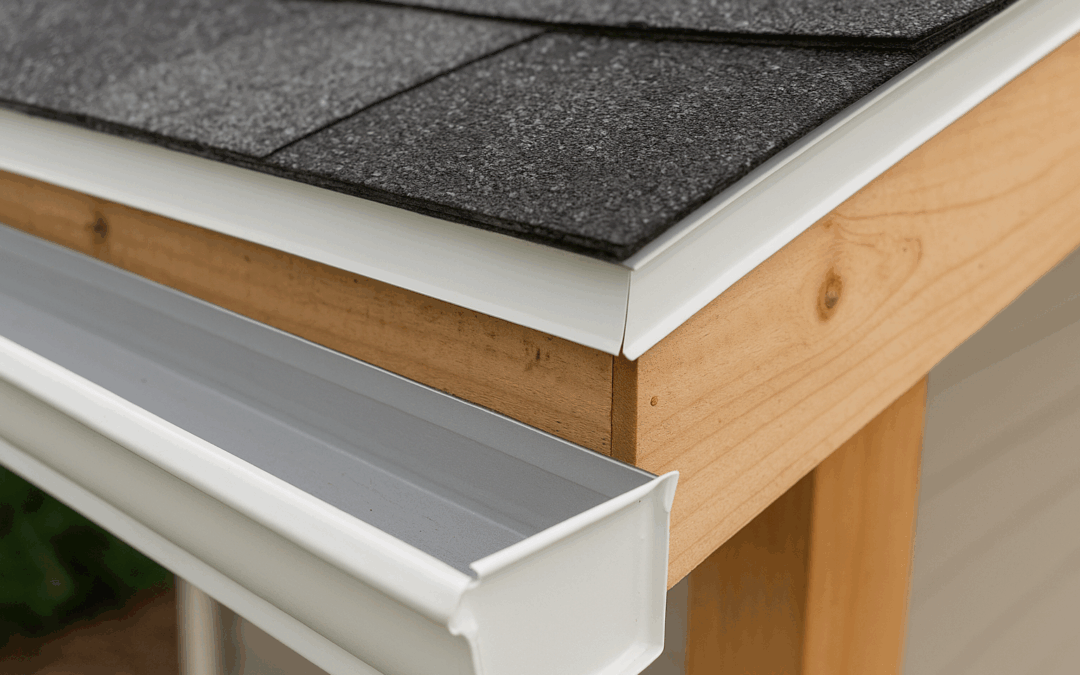
Drip edge is a formed metal flashing—typically manufactured from aluminum, galvanized steel, or copper—installed along both the eave edges (horizontal lower edges directly above gutters) and the rake edges (sloped edges along gable ends) of a roof. Its cross-sectional profile is typically L-shaped or T-shaped, designed so that one leg of the flashing lies beneath roofing materials on the deck surface while the other leg extends downward over the exterior face of the fascia board.
This specific installation geometry accomplishes a precise functional goal: it creates a continuous metal surface at the roof edge that intercepts water flowing off the roof deck and directs it cleanly away from the fascia and wood structural components at the roof edge. The name describes the mechanism—drip edge creates a defined termination point where water releases in a drip rather than migrating by capillary surface tension back along the underside of the roof decking toward the fascia board. Without this defined break, water running off the roof edge follows the wood decking surface by surface tension, traveling underneath and behind the fascia to reach structural framing, the eave space, and soffit materials—all hidden from exterior view and therefore difficult to identify until damage becomes extensive.
Building codes in Kentucky and throughout the region have increasingly recognized drip edge’s protective role, with many jurisdictions requiring its installation on new construction and re-roofing projects as a condition of code compliance. This regulatory recognition reflects the building industry’s established understanding of the moisture damage consequences that drip edge prevents.
The Functional Mechanics of Drip Edge
Understanding how drip edge works requires understanding the precise installation sequence relative to other roof edge components. At the eave—the horizontal edge directly above gutters—drip edge is installed on the bare roof deck first, before roofing underlayment. The underlayment is then installed over the drip edge. Shingles go over the underlayment. This layering sequence ensures that any water reaching the deck surface below the shingles—whether through shingle edge exposure or ice dam water migration—encounters the metal drip edge surface and is directed outward into the gutter rather than gaining access to the wood deck edge itself.
The drip edge’s extension over the fascia face positions the point where water leaves the roof edge directly above the gutter channel. This positioning is not incidental—it determines what percentage of roof runoff actually enters the gutter system rather than falling behind the gutter to the fascia surface below. Proper drip edge installation maximizes gutter capture efficiency by ensuring the roof edge water departure point is above the gutter channel at all points along the eave.
At the rake edge, the installation sequence reverses: underlayment goes on the deck first, and drip edge is installed over it, beneath the shingles. Rake drip edge protects the shingle edge at gable ends from wind-driven rain infiltration and directs water away from rake boards below.
Louisville’s Climate and Why Drip Edge Matters Here
Louisville’s position in the Ohio River Valley subjects its homes to a climate combining substantial annual precipitation, persistent humidity, pronounced seasonal temperature extremes, and active freeze-thaw cycling during winter months. Annual precipitation averages approximately 45 inches, distributed across all seasons with spring delivering the most intense rainfall activity. These conditions create year-round water management demands at the roofline that make every component of the roof edge system—including drip edge—functionally important.
Winter presents Louisville’s most distinctive climate challenge relative to drip edge performance. Freeze-thaw cycling during Louisville winters creates ice dam risk at roof edges—ice forming at the eave where warm roof surface temperatures meet cold exterior air temperatures. Ice dams force meltwater to back up beneath shingles at the eave, seeking pathways into the roof assembly. Proper drip edge installation, integrated correctly with ice and water shield underlayment at the eave, provides a more complete barrier against this meltwater infiltration than roof edge geometry without drip edge. The metal drip edge surface resists the water migration that ice dam conditions promote, providing an additional layer of protection during Louisville’s freeze periods.
Spring in Louisville delivers the Ohio Valley’s heaviest rainfall alongside the freeze-thaw and biological stresses of the seasonal transition. High-volume spring rainfall events test roof edge water management at its peak demand simultaneously with the deterioration acceleration that warmer temperatures and increased biological activity bring. Drip edge that is missing, damaged, or improperly installed during these peak demand periods allows moisture infiltration at the roof edge when rainfall volume is highest and biological deterioration conditions are becoming most active—a combination that accelerates damage development.
Louisville’s persistent Ohio Valley humidity means that moisture reaching hidden wood surfaces at the roof edge through gaps that drip edge would seal dries slowly. Wood maintaining elevated moisture content in Louisville’s humid conditions supports biological activity—fungal and bacterial deterioration—over extended periods following each moisture exposure event. The deterioration consequences of roof edge moisture infiltration therefore develop and progress faster in Louisville’s humid climate than homeowners accustomed to drier environments might anticipate.
Damage That Results from Absent or Improper Drip Edge
Fascia Moisture and Rot: Without drip edge directing water away from the fascia surface, roof runoff contacts fascia boards repeatedly with every rainfall. Louisville’s humidity slows drying, maintaining elevated fascia moisture between events. Progressive moisture exposure causes paint failure followed by wood rot, and deteriorated fascia loses the structural capacity to hold gutter fasteners—ultimately causing gutter sagging, misalignment, and separation from the roofline.
Roof Deck Edge Deterioration: Water migrating behind the fascia contacts the wood roof decking edges directly. Plywood and OSB decking absorbs this moisture, swelling and delaminating at the edge over time. Damaged roof deck edge sections require shingle removal, decking replacement, and reroofing—repairs substantially more expensive than proper drip edge installation.
Eave Space and Soffit Moisture: Moisture infiltrating the eave space through the roof edge creates hidden humidity conditions behind soffit panels. This sustained eave space moisture damages soffit materials from behind, contributes to attic moisture problems, and can establish mold growth in locations that are extremely difficult to inspect or remediate without significant roofline disassembly.
Shingle Edge Vulnerability: At the eave, drip edge provides support and backing for the first shingle course. Shingles installed without drip edge backing overhang unsupported deck at the most wind-exposed roof edge location, increasing vulnerability to wind-lift damage during Louisville’s storm events.
Observable Indicators
Louisville homeowners can observe several signs suggesting drip edge issues warrant professional evaluation. Water staining concentrated at the upper edge of fascia boards—particularly staining patterns that appear even when gutters are intact and not obviously overflowing—suggests water is contacting the fascia at the roof edge rather than entering the gutter. Fascia paint failing specifically at the top edge while the lower fascia surface remains in reasonable condition indicates water contact at the roof-to-fascia transition. Any visible gap between the shingle overhang and the gutter back wall suggests roofline geometry that may lack properly installed drip edge.
Conclusion
Drip edge is a component that performs its protective role invisibly and continuously in a well-maintained Louisville, Kentucky home’s roofline system. Cardinal Gutters recognizes that Louisville-area homeowners benefit from understanding what drip edge is, how its precise installation geometry integrates the roof surface, fascia, and gutter system into a continuous and effective water management pathway, why Louisville’s four-season climate with its substantial precipitation, persistent Ohio Valley humidity, and winter freeze-thaw cycling makes correct drip edge installation particularly important, and what structural damage develops progressively when this critical roof edge component is absent or incorrectly installed. Drip edge represents a small component with significant protective consequences for every Louisville home that faces the full range of Ohio Valley weather throughout every season.