
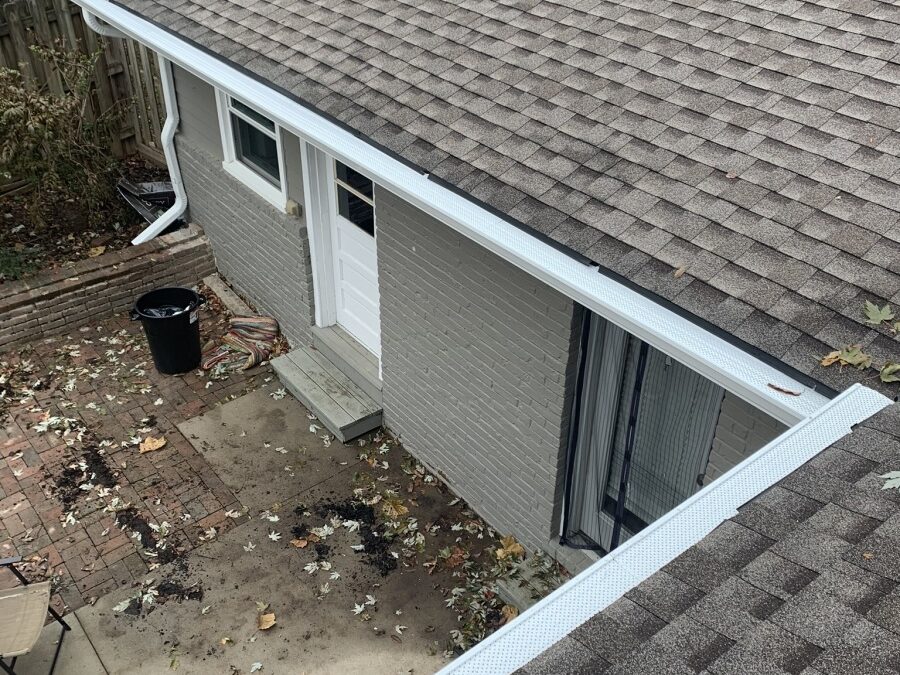
Louisville, Kentucky homeowners evaluating gutter installation or replacement options encounter a significant decision between traditional sectional gutters and modern seamless gutter systems. This choice substantially affects long-term performance, maintenance requirements, and water management effectiveness. Cardinal Gutters regularly educates Louisville-area property owners about seamless gutter characteristics, explaining how this technology differs from conventional approaches and why it has become the preferred standard in residential applications. Comprehensive understanding of seamless gutters—their fabrication process, performance advantages, potential limitations, and maintenance requirements—enables homeowners to make informed decisions protecting their properties from water-related damage.
Defining Seamless Gutter Systems
Seamless gutters represent a fundamental evolution in gutter system design and construction. Traditional sectional gutters are manufactured in standard pre-cut lengths, typically 10-foot sections, which are then transported to installation locations and assembled on-site by connecting multiple pieces together. These connections require mechanical joining hardware and waterproof sealants to prevent leaking. A typical residential installation might involve dozens of these connection points, each representing both a structural joint and a potential future failure location.
Seamless gutters take a different approach by eliminating most of these joints entirely. Rather than assembling pre-cut sections, seamless systems are custom-fabricated on-site as continuous single pieces for each straight run along a roofline. This fabrication utilizes specialized portable equipment known as gutter machines, seamless gutter machines, or roll-forming machines. These devices accept coiled flat metal stock and progressively shape it through a series of precisely positioned forming rollers that bend and configure the material into the desired gutter profile.
As raw material feeds continuously through the machine, finished gutter emerges ready for installation in whatever length the building requires. The practical length limit depends on material coil capacity and handling considerations rather than predetermined section lengths—single continuous pieces of 100 feet or more are entirely feasible. This on-site custom fabrication ensures each gutter section fits building dimensions exactly without unnecessary seams or compromises.
The most common residential seamless gutter profile is the K-style, also called ogee style, which features a decorative face resembling crown molding combined with functional efficiency. This profile typically comes in 5-inch and 6-inch widths, with the larger 6-inch size increasingly popular due to greater water-carrying capacity during heavy rainfall events. Half-round profiles, featuring semicircular cross-sections, represent another option particularly appropriate for historic properties or homes requiring specific architectural character.
Aluminum dominates seamless gutter material selection for multiple practical reasons. It naturally resists corrosion without requiring protective coatings, maintains manageable weight that doesn’t excessively load fascia boards, can be painted or comes with factory-applied color finishes in numerous options, and provides favorable strength-to-cost performance. Standard residential aluminum gutter thickness ranges from .027 inches to .032 inches, with heavier gauge material offering increased durability and rigidity at higher cost. Copper seamless gutters provide exceptional longevity and distinctive appearance but cost considerably more. Steel offers maximum structural strength but requires protective coatings to prevent rust formation.
How Seamless Gutters Differ From Sectional Systems
The fundamental distinction between seamless and sectional gutters centers on joint quantity and assembly methodology. Sectional gutter systems consist of numerous factory-manufactured pieces connected together during installation. A home with 120 linear feet of roofline perimeter might require twelve or more separate 10-foot gutter sections plus additional corner pieces, end caps, downspout outlets, and connection hardware. Each joint must be mechanically fastened and sealed with caulk or gaskets to create watertight connections. Over years of service, these multiple seams become vulnerability points as sealants age and deteriorate from weather exposure, ultraviolet radiation, and thermal cycling.
Seamless construction dramatically reduces this joint count. That same 120-foot roofline might be served by perhaps three or four continuous gutter sections with seams existing only at corners and downspout locations where joints remain functionally necessary. This represents a reduction from potentially dozens of leak-vulnerable connections to just a handful, fundamentally changing the system’s long-term reliability profile.
Installation processes differ substantially between these approaches. Sectional gutters are available at retail home improvement stores and can be installed by homeowners possessing basic tool skills and construction knowledge. This DIY accessibility appeals to budget-conscious property owners willing to invest their own labor rather than paying for professional installation. Seamless gutters require professional installation utilizing specialized fabrication equipment, precise measurement capabilities, and installation expertise. While eliminating DIY options, this professional requirement ensures proper slope calculation, secure mounting, optimal downspout positioning, and quality workmanship.
Aesthetic differences clearly favor seamless construction. Without visible seams, connectors, and joint hardware interrupting rooflines, seamless gutters create clean, continuous visual lines that enhance architectural appearance. Custom fabrication to exact building dimensions eliminates the slight misalignments, gaps, or overlaps that sometimes occur when adapting standardized sectional lengths to actual building measurements.
Primary Benefits Seamless Gutters Provide
Dramatically reduced leak potential represents the most compelling functional advantage seamless gutters offer. Industry experience and installer observations consistently confirm that the overwhelming majority of gutter leaks develop at seams where separate sections connect. Caulks and sealants used at these joints inevitably degrade through continuous exposure to ultraviolet radiation, temperature variations, moisture, and simple aging. As sealants fail and gaps develop, water escapes the gutter system, potentially causing fascia rot, foundation damage, soil erosion around plantings, and basement or crawlspace moisture infiltration. By eliminating most seams through continuous construction, seamless gutters remove most leak vulnerabilities from the system.
Significantly reduced maintenance requirements flow directly from this enhanced leak resistance. Sectional gutter systems often require periodic joint re-sealing as original caulking compounds fail and leak. This ongoing maintenance involves both material costs for new sealants and labor investment—whether homeowner time or professional service fees. Seamless gutters eliminate most of this maintenance burden, requiring primarily routine debris removal and occasional inspection rather than regular joint maintenance and re-sealing.
Enhanced structural integrity characterizes seamless gutter installations. Continuous one-piece construction distributes loads uniformly across entire gutter lengths, supported by appropriately spaced mounting brackets or hidden hangers. Sectional systems concentrate structural stress at connection points where accumulated water weight and debris loads can cause joint separation, sagging, or outright failure. Seamless gutters handle these service loads more effectively, reducing risks of sagging, separation, or structural failure.
Precise custom fitting optimizes performance for each specific property. Because seamless gutters are fabricated to exact measurements for each unique installation, they fit building dimensions perfectly without compromise. Downspout locations can be positioned optimally for property drainage patterns, landscape features, and water management needs rather than being constrained by sectional gutter length limitations. This customization maximizes effectiveness for each property’s unique characteristics.
Superior aesthetic appearance provides benefits beyond pure function. The clean, uninterrupted lines of seamless gutters complement home architecture more gracefully than sectional systems with their visible joints, connectors, and hardware. Available in numerous colors that can match or complement exterior paint, siding, and trim, seamless gutters enhance rather than compromise curb appeal and property appearance.
Enhanced property value represents a less tangible but genuine benefit. Real estate professionals and prospective home buyers recognize quality seamless gutter systems as desirable modern features. Properties with well-maintained seamless gutters may benefit during sales processes through positive impressions that support faster transactions and potentially stronger purchase offers.
Seamless Gutter Advantages in Louisville’s Climate
Louisville’s humid subtropical climate featuring hot, humid summers and cold winters with substantial precipitation creates specific conditions where seamless gutter advantages become particularly relevant and valuable. The city receives approximately 45 inches of annual precipitation, considerably above national averages. This substantial rainfall frequently arrives in intense thunderstorm events capable of producing rainfall rates exceeding two inches per hour during peak intensity, particularly during spring and summer months.
These intense precipitation events create enormous water volumes that gutter systems must efficiently collect and channel away from structures. Seamless gutters provide performance advantages during such events through both superior flow characteristics and enhanced leak resistance. Each seam in sectional gutter systems creates not only potential leak points but also slight flow restrictions where overlapping section edges form internal ridges or discontinuities. While individually minor, multiple seams collectively reduce flow efficiency. Seamless construction eliminates these restrictions, permitting unimpeded water flow along entire gutter lengths.
Louisville’s elevated humidity levels and frequent moisture exposure accelerate sealant deterioration in sectional gutter joint connections. Constant wet-dry cycling combined with intense summer heat causes caulking compounds and gasket materials to break down more rapidly than in drier climates. Seamless construction’s minimal dependence on sealants provides more reliable long-term performance requiring less maintenance intervention.
Regional severe weather patterns—including high winds, hail storms, and intense thunderstorm systems—can severely stress gutter installations. Seamless gutters’ superior structural integrity provides better resistance to storm-related damage. Without multiple connection points that can separate or fail under stress, seamless systems maintain functional integrity more effectively during severe weather events.
Thermal expansion effects from Louisville’s temperature variations between summer heat and winter cold affect all gutter materials. Metals expand during heat exposure and contract in cold, creating movement and stress. In sectional systems, this thermal cycling stresses joints, gradually working sealants loose and creating leak-prone gaps. Seamless gutters experience identical thermal movement but possess far fewer joints vulnerable to this repetitive stress.
Important Considerations and Potential Limitations
Despite substantial advantages, seamless gutters involve considerations worth understanding before making installation decisions. Higher initial installation cost represents the most obvious factor. Seamless gutter installation typically costs more than sectional system installation due to specialized equipment requirements, professional installation necessity, custom fabrication processes, and skilled labor. However, this initial cost premium should be evaluated against reduced lifetime maintenance expenses, fewer required repairs, and longer functional service life that often offset the upfront difference.
Professional installation requirement eliminates do-it-yourself options. Homeowners comfortable with construction projects and possessing basic tool skills can install sectional gutters themselves, saving professional labor costs while investing their own time and effort. Seamless gutters require professional installation services, adding labor expenses but ensuring proper measurement accuracy, correct fabrication, proper slope calculation, secure mounting, and quality workmanship that DIY installations might not achieve consistently.
Repair complexity and costs can differ from sectional systems. When damage affects a section of seamless gutter, the entire continuous piece often requires replacement rather than just the specifically damaged segment as might be possible with sectional systems. This can increase repair costs in situations involving localized damage, though the overall reduced frequency of damage and problems generally offsets this consideration over the system’s lifetime.
Transportation and property access challenges occasionally arise with very long seamless gutter sections. Continuous pieces exceeding certain lengths become difficult to transport safely and maneuver around obstacles, trees, landscaping, and architectural features. Properties with limited access—extremely narrow side yards, dense mature landscaping, steep terrain, or restricted entry points—may face practical constraints on maximum seamless section lengths. In such circumstances, additional seams may become necessary, though still resulting in far fewer joints than equivalent sectional systems would require.
Material availability and selection focus primarily on aluminum for seamless applications, with copper and steel available as specialty premium options through professional installers. Sectional gutters offer broader material selection including vinyl, which cannot be manufactured as seamless gutters due to material characteristics that prevent on-site forming and shaping processes.
Maintaining Seamless Gutter Systems
While seamless gutters require substantially less maintenance than sectional alternatives, they still benefit from regular attention and care. Periodic cleaning remains essential regardless of gutter construction type or quality. Louisville’s abundant urban and suburban tree canopy produces significant volumes of leaves, twigs, seed pods, and other organic debris that inevitably accumulates in gutter channels. This accumulated material blocks water flow causing overflows, adds weight that stresses mounting systems, and creates persistent moisture conditions that can eventually promote corrosion even in naturally corrosion-resistant aluminum gutters.
Recommended minimum cleaning frequency is twice annually—typically once in late spring and again in late fall—though properties with heavy tree coverage or particularly problematic debris-producing trees may require more frequent attention. Effective cleaning involves physically removing all accumulated debris, thoroughly flushing gutters and downspouts with water to verify unobstructed flow, and carefully inspecting for any damage, proper slope maintenance, secure mounting hardware, and functional connections at the seams that do exist.
Systematic inspection conducted during cleaning sessions identifies developing issues before they become serious problems. Verify that gutters maintain proper slope toward downspout locations—generally approximately 1/4 inch decline per 10 feet of horizontal run. Check that all mounting brackets or hidden hangers remain securely fastened and appropriately spaced. Look carefully for any damage including dents, cracks, holes, or areas where gutters have separated from fascia mounting surfaces. Examine the limited seams that exist—at corner transitions and downspout outlet connections—for any signs of deterioration, separation, or leaking.
Gutter protection systems including guards, screens, or covers can significantly reduce required cleaning frequency. These products install over or into gutter openings, admitting water while excluding most debris. Numerous designs exist with varying effectiveness levels, installation methods, and price points ranging from economical to premium. While not completely eliminating cleaning requirements, quality gutter protection systems can substantially extend intervals between necessary cleaning sessions.
Conclusion
Seamless gutters have clearly become the contemporary standard for residential gutter installations throughout Louisville, Kentucky, and surrounding areas, offering compelling advantages over traditional sectional systems through dramatically reduced leak potential, significantly lower maintenance requirements, enhanced structural strength and durability, and noticeably superior aesthetic appearance. Cardinal Gutters recognizes that Louisville-area homeowners who thoroughly understand seamless gutter technology, fabrication processes, and performance characteristics can make well-informed decisions about gutter installations or replacement projects that effectively protect their properties while minimizing long-term maintenance demands and expenses. Though seamless gutters require higher initial investment compared to sectional alternatives, their substantially reduced maintenance needs, greater functional longevity, and superior performance—particularly valuable in Louisville’s climate of intense rainfall events and elevated humidity levels—make them worthwhile investments for most residential applications. Whether undertaking new construction, replacing aging or failing sectional gutter systems, or simply seeking to better understand residential water management systems, comprehensive knowledge about seamless gutter technology and its advantages supports effective property protection and wise long-term stewardship decisions.