Louisville, Kentucky’s position at the confluence of the Ohio River Valley and the mid-continent weather corridor creates a four-season climate of significant variability and intensity — one that places year-round demands on residential gutter systems that homeowners benefit from understanding in specific and practical terms. From the heavy spring thunderstorms that pour rainfall across Louisville’s river-valley topography to the ice storms and freeze-thaw cycling of Ohio Valley winters, from summer heat that stresses gutter materials to the massive autumn leaf fall from Louisville’s diverse hardwood canopy, every season of Louisville’s calendar presents distinct gutter performance demands and maintenance considerations. Cardinal Gutters recognizes that Louisville-area homeowners deserve a thorough, detailed understanding of how the city’s specific climate patterns affect gutter systems, what seasonal challenges arise, and what consequences develop when gutter maintenance fails to account for Louisville’s particular environmental conditions.
Louisville’s Rainfall and Storm Patterns
Louisville receives approximately 45 inches of average annual precipitation, distributed throughout the year with the heaviest concentration falling during spring and early summer. The city’s position in the Ohio River Valley creates a geography that funnels and concentrates moisture from multiple storm tracks — Gulf moisture surges moving northward, frontal systems tracking along the Ohio Valley corridor, and convective systems developing over the warm mid-continent in spring and summer all contribute to Louisville’s precipitation profile.
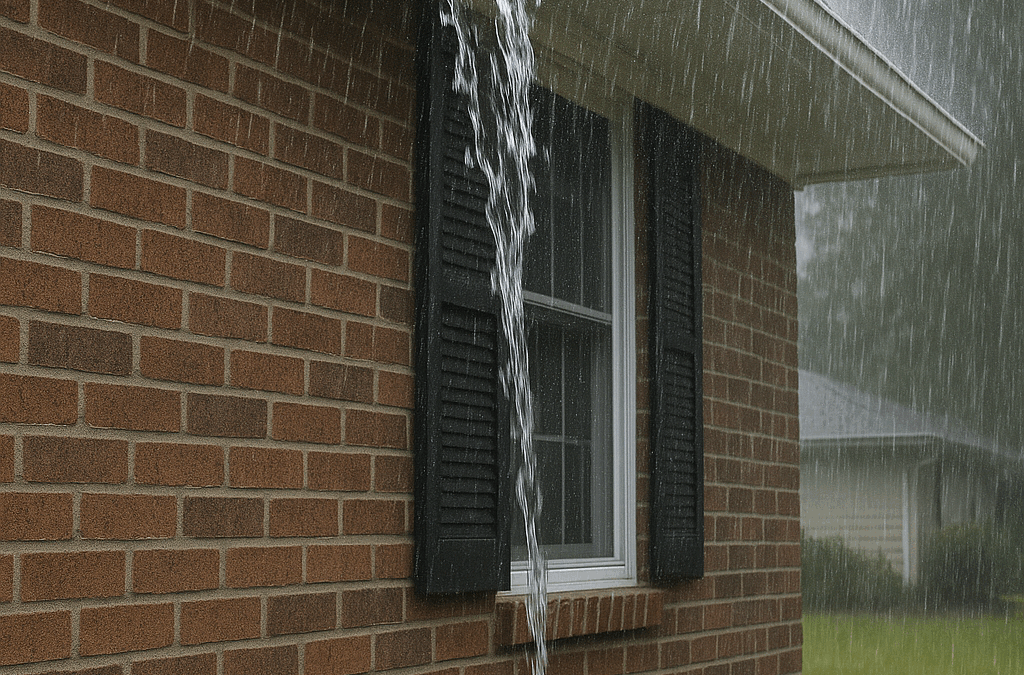
Spring in Louisville — the period from roughly March through May — delivers the year’s most rainfall-intensive conditions alongside the thunderstorm activity that warm, unstable air masses over the Ohio Valley produce. High-volume spring events can deposit two or more inches of rain within a matter of hours, generating roof surface runoff rates that demand maximum gutter drainage capacity simultaneously with maximum downspout flow rates and effective ground-level dispersal. Any reduction in drainage capacity from debris accumulation, inadequate slope, or blocked downspouts that might go unnoticed during lighter rainfall becomes critically apparent during Louisville’s intense spring events — manifesting as overflow that deposits concentrated water at the foundation perimeter or runs behind the fascia toward structural wood components.
Summer in Louisville combines continued rainfall with extreme heat and high Ohio Valley humidity that affect gutter system materials in ways that pure rainfall statistics do not capture. Louisville summer temperatures regularly reach the upper 80s and 90s Fahrenheit, and gutter runs exposed to this heat — particularly south and west-facing runs receiving maximum solar exposure — undergo significant thermal expansion. The sealants at mitered corners, end caps, and outlet connections that prevent water from bypassing the gutter channel and reaching the fascia are particularly vulnerable to the heat cycling between hot afternoons and cool nights that Louisville summers produce, hardening over time and eventually cracking to create leak points that may not produce visible damage until rainfall rates are high enough to generate significant water volume at failed sealant locations.
Ohio Valley Winter: Louisville’s Most Distinctive Gutter Challenge
Louisville’s winters present the climate characteristics most distinctive from other mid-South cities, and they create gutter challenges that homeowners in warmer climates do not face. The Ohio Valley’s geography funnels Arctic air masses southward during winter months, creating Louisville’s regular freeze-thaw cycling — periods where temperatures cycle repeatedly above and below 32 degrees Fahrenheit across days and weeks of the winter season.
This freeze-thaw cycling is the defining winter climate factor for Louisville gutter systems. Gutters that retain debris and therefore standing water are directly vulnerable to this cycling: water retained in debris-blocked gutters freezes during cold periods, expanding within the gutter channel and exerting outward pressure on gutter walls, end caps, and joint sealants. The freeze-thaw cycle repeated across a Louisville winter progressively stresses and ultimately fails these gutter system components in ways that normal rainfall loading alone would not produce for years.
Ice dam formation is a real concern for Louisville homes during cold events. When warm attic air escapes through the roof surface — a consequence of inadequate attic insulation or ventilation — it melts snow or ice on the upper roof while the eave area remains cold enough to refreeze meltwater. This refreezing at the eave creates ice accumulation in gutters that eventually forces backed-up meltwater beneath shingles. Louisville homes with debris-blocked gutters are particularly vulnerable to ice dam conditions because the debris retains water at the eave that would otherwise drain — creating the standing water that freeze conditions turn into expanding, damaging ice masses.
Louisville also experiences ice storm events — freezing rain that coats exposed surfaces including gutters with clear ice. The weight of ice accumulation in gutters, particularly in gutters that already carry debris loads from autumn leaf fall, creates significant stress on gutter fasteners and the fascia boards they engage. Louisville homeowners who notice gutters sagging or pulling away from the roofline after winter have often experienced ice loading that exposed underlying weaknesses in fascia integrity or gutter hanger installation.
Louisville’s Tree Canopy and Seasonal Debris Loading
Louisville’s residential tree canopy is one of the Ohio Valley’s most impressive urban forestry features, with established neighborhoods from the Highlands to St. Matthews to Anchorage featuring mature trees that have grown over decades in Louisville’s productive climate. This canopy creates extraordinary seasonal beauty and meaningful environmental benefits — and it creates one of the most challenging debris loading environments for residential gutters in the region.
Louisville’s tree diversity produces a multi-season debris calendar that challenges the once-per-year cleaning approach that suffices in less vegetated environments. Spring brings pollen, catkins, and seed material from oaks, maples, and diverse ornamental species. Silver maple — extremely common throughout Louisville’s neighborhoods — produces seed material earlier than most trees, beginning debris loading before spring’s peak rainfall season. Summer storms deposit leaves and small branches. Autumn’s leaf fall — concentrated in October and November — represents the year’s peak debris event, with Louisville’s mixed hardwood canopy depositing enormous leaf volumes in gutters across the metropolitan area. Late-dropping species including oaks retain leaves into December, meaning Louisville gutters cleaned in late October may still require attention in December before winter freeze events create ice conditions in debris-blocked channels.
The combination of diverse debris types — leaves, seeds, pollen masses, small branches, and organic matter from the abundant Louisville canopy — creates accumulations that compact within gutter channels, retain moisture, and develop into organic deposits that are more difficult to remove than fresh leaf debris and that accelerate corrosion of metal gutter components through the organic acids their decomposition produces.
Foundation and Drainage Consequences in Louisville
Louisville’s clay-heavy soils throughout much of the metropolitan area create foundation moisture consequences that make gutter performance directly relevant to structural health. Clay soils expand when wet and contract when dry — a shrink-swell behavior that creates movement stress on foundation structures when soil moisture cycling is pronounced. Gutters that overflow or that direct downspout discharge at the foundation perimeter contribute to repeated soil saturation and drying cycles that can cause foundation movement, settling, and cracking in Louisville’s clay soil environment over time.
Louisville’s topography also concentrates surface water in specific drainage patterns that homeowners should understand in relation to downspout placement and discharge direction. Properties at low points or with grades that direct neighboring surface water toward the foundation perimeter need gutter systems that discharge effectively away from the structure — not just away from the immediate fascia and roofline but away from the foundation drainage zone entirely.
Seasonal Maintenance Timing for Louisville Homes
Louisville’s specific climate argues for a maintenance approach organized around the city’s seasonal weather patterns. Late winter or early spring cleaning — removing debris accumulation before the March-to-May peak rainfall season begins — ensures maximum drainage capacity entering the storm season. Post-leaf fall cleaning — timed after November defoliation is substantially complete but before December freeze events — removes the year’s heaviest debris accumulation before ice conditions create frozen debris masses in gutter channels. Joint sealant inspection after summer’s heat cycling and after winter’s thermal stress identifies failures before active rainfall reveals them through water damage to fascia and soffit.
Conclusion
Louisville, Kentucky’s Ohio River Valley climate — with its heavy spring rainfall, intense summer heat stressing gutter materials, distinctive winter freeze-thaw cycling creating ice dam and ice loading risks, and exceptional tree canopy producing multi-season debris loading — creates one of the most comprehensive year-round gutter maintenance environments in the region. Cardinal Gutters recognizes that Louisville-area homeowners benefit from understanding how each season of Louisville’s specific climate creates distinct gutter system demands, what the cumulative consequences of inadequate gutter maintenance look like in Louisville’s particular environmental conditions, and why maintenance timing and thoroughness aligned with Louisville’s weather patterns delivers meaningfully better protection for every home in the Louisville metropolitan area. The relationship between Louisville’s climate and gutter system performance is practical knowledge that supports better decisions about maintenance, system upkeep, and the long-term protection of one of every homeowner’s most significant investments.