
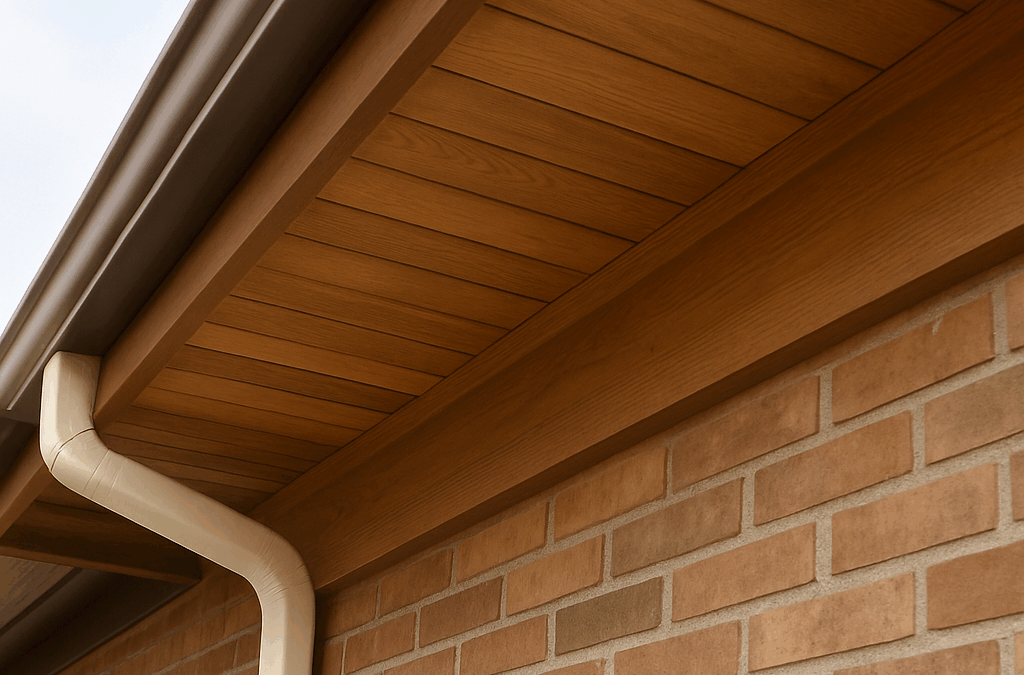
Wood soffits perform critical protective and ventilation functions for residential structures, yet many Louisville homeowners remain unaware of the specific vulnerabilities these components face in the region’s humid continental climate until visible damage appears as rot, warping, staining, or pest infestation compromising both function and appearance. Understanding what wood soffits are and their essential roles, the particular environmental conditions in Louisville that accelerate wood deterioration, common damage patterns and underlying causes, warning signs indicating repair or replacement needs, and practical considerations involved in restoring compromised soffit systems provides homeowners with knowledge necessary for protecting roof structures and preserving home value. Cardinal Gutters of Louisville, KY presents this detailed educational resource explaining wood soffit fundamentals, deterioration mechanisms specific to Louisville’s climate, repair versus replacement decision factors, and essential information homeowners should understand about wood soffit maintenance and restoration.
Understanding Wood Soffits and Their Essential Roles
Soffits are the exposed horizontal surfaces beneath roof overhangs—the underside panels visible when looking upward at eaves where roofing extends beyond exterior walls. Wood soffits consist of natural wood materials including solid wood boards, plywood panels, or engineered wood products rather than vinyl, aluminum, or fiber cement alternatives. Many Louisville homes constructed before the widespread adoption of synthetic alternatives in the 1970s and 1980s feature original wood soffits that may now be several decades old, and understanding how these materials perform and deteriorate helps inform maintenance and replacement decisions.
Wood soffits fulfill multiple essential functions affecting both building performance and structural longevity. From an aesthetic perspective, they provide finished appearance to roof overhangs, creating visual continuity between roofing systems and exterior walls while concealing structural framing members including rafters, roof sheathing edges, and trim components that would otherwise be exposed. More critically from a structural standpoint, soffits protect roof framing from direct weather exposure including wind-driven rain, moisture infiltration, and environmental conditions that would accelerate deterioration of structural lumber.
The ventilation function represents perhaps the most important yet frequently overlooked soffit role. Properly designed soffits incorporate perforations, screened openings, or ventilation channels allowing continuous air circulation into attic spaces. This ventilation serves multiple critical purposes including moderating attic temperatures during summer to reduce cooling loads and prevent premature shingle degradation, removing moisture-laden air before condensation occurs on cold surfaces during winter, preventing ice dam formation during freeze-thaw cycles, and maintaining air quality by preventing stagnant conditions promoting mold growth.
Inadequate attic ventilation creates multiple cascading problems including excessive summer heat accumulation that radiates into living spaces and accelerates asphalt shingle aging, winter condensation on roof sheathing causing wood rot and insulation damage, elevated energy costs as climate control systems work against extreme attic conditions, and potential structural damage from chronic moisture exposure. Properly functioning wood soffits with adequate ventilation openings work in conjunction with ridge vents, gable vents, or other exhaust ventilation to create beneficial air circulation patterns.
Wood as a soffit material offers certain advantages including natural aesthetic appeal particularly appropriate for traditional architectural styles, ease of field modification for repairs or alterations using standard carpentry techniques, compatibility with paint and stain finishes that can be periodically refreshed to maintain appearance, and workability with conventional tools. However, wood also presents inherent vulnerabilities particularly problematic in humid climates like Louisville, where moisture exposure, biological decay organisms, freeze-thaw cycling, and environmental conditions accelerate deterioration compared to drier or more consistently temperate regions.
Louisville Climate Factors Accelerating Wood Soffit Deterioration
Louisville’s humid subtropical climate with continental influences creates environmental conditions particularly challenging for wood building components including soffits. Understanding these specific regional factors helps explain why wood soffits in Louisville face aggressive deterioration patterns.
High relative humidity throughout much of the year—particularly during summer months when humidity regularly exceeds seventy percent and frequently approaches saturation levels—means wood soffits rarely dry completely between moisture exposure events. Wood is hygroscopic, naturally absorbing and releasing moisture in response to surrounding relative humidity. In persistently humid environments, wood maintains elevated moisture content promoting fungal colonization, bacterial decay, and gradual structural degradation even without direct precipitation contact.
Substantial annual precipitation approaching forty-five inches creates frequent direct moisture exposure for soffit systems, particularly when gutter systems overflow due to clogging, leak at seams, or fail to channel water effectively. When gutters don’t perform their intended function, water cascades directly against fascia boards and soffits, creating saturation conditions dramatically accelerating wood decay. Even brief overflow events during intense spring and summer thunderstorms can deliver sufficient moisture to initiate decay processes in vulnerable wood, especially if protective paint or stain finishes have deteriorated.
Temperature cycling between hot humid summers with temperatures regularly exceeding ninety degrees and cold winters with frequent freezing creates expansion and contraction stresses that open joints between soffit panels, crack protective paint films, and create entry points for moisture infiltration. Louisville’s position at the transition between southern and northern climate zones means seasonal temperature swings can exceed eighty degrees between summer highs and winter lows. This thermal cycling—particularly when combined with moisture presence—progressively damages wood cellular structure and degrades protective coatings.
Freeze-thaw cycling during winter and early spring creates particularly destructive conditions for moisture-saturated wood. Water absorbed into wood expands approximately nine percent upon freezing, creating internal pressures that rupture cell walls and progressively destroy wood structure. A single winter season may include twenty to forty freeze-thaw cycles in Louisville, each potentially causing cumulative damage to moisture-compromised wood soffits.
Biological organisms including wood-decay fungi, carpenter ants, termites, and wood-boring beetles thrive in Louisville’s climate. Wood-decay fungi require moisture above twenty percent wood content, moderate temperatures, oxygen, and wood cellulose as food—all conditions readily available in Louisville for extended periods. Once fungal colonization begins, decay progresses rapidly with visible deterioration appearing within one to three years depending on wood species, moisture levels, and specific organisms involved.
Carpenter ants preferentially attack wood already compromised by moisture-related decay, excavating extensive galleries that further undermine structural integrity. Subterranean termites, present throughout Louisville, can infest soffits contacting soil, mulch, or moisture sources, causing extensive hidden damage. Wood-boring beetles including powder post beetles also attack softened or decaying wood.
Inadequate attic ventilation—resulting from soffit ventilation openings becoming painted over, blocked by insulation, or eliminated during previous repairs—creates moisture accumulation attacking soffits from interior surfaces. When warm moisture-laden air from living spaces rises into inadequately ventilated attics during heating season, it contacts cold roof sheathing and soffit panels, condensing into liquid water that saturates wood and initiates decay from the hidden interior side.
Common Wood Soffit Damage Patterns and Indicators
Recognizing damage indicators enables homeowners to identify problems before progression to structural failure or additional damage to roof framing and building interiors.
Wood Rot and Fungal Decay
Wood rot manifests as darkened, softened, or crumbling wood having lost structural integrity due to fungal decay organisms. Early-stage rot may appear as subtle dark staining without obvious structural compromise, while advanced rot produces wood feeling spongy when probed, crumbling easily, or deteriorated into fibrous material. Rot typically initiates at joints between panels, where soffits meet fascia boards, around ventilation penetrations, or anywhere moisture accumulates. Once established, rot spreads progressively as fungal mycelia colonize adjacent material.
Paint Failure and Peeling
Paint peeling, blistering, bubbling, or flaking indicates underlying moisture problems often before wood shows visible decay. Paint protects wood by creating moisture barriers, and barrier failure makes wood vulnerable to rapid moisture absorption. Peeling typically begins at horizontal surfaces, joints between boards, or locations receiving minimal solar exposure remaining damp longer. Widespread paint failure suggests inadequate surface preparation, incompatible products, or chronic moisture overwhelming protective capacity.
Warping and Dimensional Changes
Wood warping—cupping, bowing, or twisting—results from uneven moisture absorption causing differential expansion. Warped boards create gaps allowing additional infiltration, pest entry, and insect access while creating irregular appearance. Warping indicates repeated wetting-drying cycles, and warped boards rarely return to original profiles after drying.
Staining and Discoloration
Water staining appears as darkened streaks, patches, or overall discoloration distinct from original finish. Staining indicates active or historical moisture exposure and frequently precedes structural deterioration. Black or dark green staining indicates mold or mildew colonization. Brown or rust staining may result from tannin leaching or fastener corrosion. Persistent staining despite cleaning suggests ongoing moisture problems.
Sagging or Separation
Soffits sagging from fascia boards or framing indicate fastener failure, wood deterioration, or underlying support damage. Sagging creates gaps allowing infiltration and entry while permitting rain accelerating deterioration. Severe sagging suggests advanced damage requiring prompt attention preventing complete failure.
Pest Infestation Evidence
Carpenter ant presence, termite mud tubes, wood-boring beetle exit holes, or visible insect activity indicates active infestation causing ongoing damage. Pest damage compounds moisture-related deterioration and rapidly compromises integrity once established.
Interior Attic-Side Damage
Damage visible from attic spaces including mold growth, staining, or deterioration on interior surfaces indicates moisture problems from ventilation deficiencies, roof leaks, or condensation. Interior damage often progresses more extensively before detection because it’s hidden from routine observation.
Contributing Deterioration Factors
Gutter System Failures
Clogged, leaking, or improperly sloped gutters overflowing during rainfall deliver concentrated water against fascia and soffits, creating saturation rapidly initiating decay. Proper gutter maintenance represents the most effective preventative measure.
Inadequate Roof Overhang
Minimal overhang provides limited protection from wind-driven rain compared to deeper overhangs effectively shielding soffit areas.
Poor Paint Maintenance
Deteriorated or absent finishes leave wood unprotected from moisture absorption. Paint should be maintained through periodic inspection and recoating every five to ten years.
Ventilation Inadequacies
Blocked, insufficient, or absent soffit ventilation creates attic moisture accumulation attacking soffits from interior while contributing to roof system problems and elevated energy costs.
Previous Improper Repairs
Past repairs using inappropriate materials, incorrect methods, or partial fixes addressing symptoms without resolving underlying causes typically fail prematurely and may create new problems.
Wood Species and Quality
Original construction using low-grade lumber, moisture-sensitive species, or wood without proper treatment deteriorates more rapidly than premium materials with protective treatments.
Repair Versus Replacement Decisions
Repair Appropriate When
Limited localized damage affecting small sections can be successfully repaired by removing deteriorated portions, addressing moisture sources, treating remaining wood, installing new matching sections, and refinishing. Repairs make sense when damage is confined, causes can be corrected, and remaining material is sound.
Replacement Indicated When
Widespread deterioration affecting multiple panels or entire elevations typically indicates systemic problems where repairs won’t provide lasting solutions. Replacement becomes more cost-effective when damage exceeds thirty to forty percent, when addressing underlying problems would disturb existing soffits, or when transitioning to lower-maintenance materials is desired.
Material Options
Replacement choices include new wood for maintaining original appearance, vinyl for minimal maintenance and moisture resistance, aluminum for durability and pest immunity, or fiber cement for dimensional stability and rot resistance.
Addressing Underlying Causes
Successful restoration requires identifying and correcting root causes rather than simply replacing materials. If moisture sources aren’t resolved, new soffits will deteriorate as rapidly as replaced materials.
Conclusion
Wood soffit deterioration represents a common challenge for Louisville homeowners due to the region’s humid continental climate, substantial precipitation, biological organism activity, and freeze-thaw cycling creating demanding conditions for wood materials. Cardinal Gutters of Louisville, KY encourages homeowners to understand critical soffit functions, recognize regional environmental factors accelerating deterioration, identify warning signs indicating repair or replacement needs, and appreciate that successful restoration requires addressing underlying moisture sources and ventilation deficiencies in addition to replacing damaged materials. Regular inspection, prompt attention to early indicators, diligent gutter maintenance, adequate ventilation, and proper paint maintenance represent essential practices for extending wood soffit service life and protecting roof structures. This educational overview is provided to inform homeowner understanding without implying specific repair capabilities or service commitments.