
Louisville homeowners considering gutter installation or replacement frequently encounter recommendations for seamless gutters without fully understanding what distinguishes them from traditional sectional systems or why this distinction significantly impacts performance, longevity, and maintenance requirements. For homes in Louisville, KY, where annual precipitation approaches forty-five inches and seasonal weather includes both intense summer thunderstorms and winter freeze-thaw cycles, understanding seamless gutter technology, manufacturing processes, and performance advantages helps property owners make informed decisions that protect their homes effectively. Cardinal Gutters of Louisville, KY presents this comprehensive educational resource explaining seamless gutter fundamentals, construction differences from sectional alternatives, specific benefits for Louisville’s climate, and practical considerations homeowners should understand when evaluating gutter options.
Seamless Gutter Construction Fundamentals
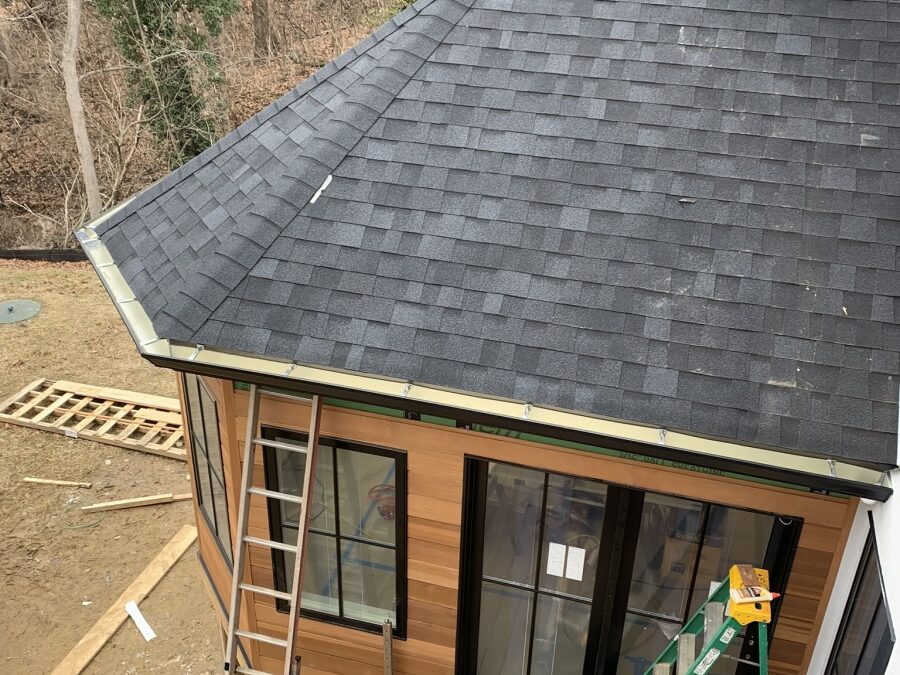
Seamless gutters, also called continuous gutters, are manufactured from a single continuous piece of material custom-formed to the exact length required for each specific gutter run on a home. Unlike traditional sectional gutters composed of pre-cut ten or twenty-foot segments joined together with connectors and sealed with caulk, seamless gutters have no joints or seams along their horizontal runs—seams appear only at inside and outside corners and at downspout outlet locations where they’re structurally necessary.
The manufacturing process employs specialized portable gutter-forming machines brought directly to installation sites. These machines feed coiled metal stock—typically aluminum, though copper and steel are also used—through a series of progressive forming rollers that gradually shape the flat material into the familiar K-style or half-round gutter profile. Because the machine creates gutters on-site to measurements taken from the specific building, each gutter section can be as long as needed for a particular roof edge, with many installations featuring single continuous runs of sixty, eighty, or even one hundred feet or more without interruption.
Material options for seamless gutters are essentially identical to those available for sectional systems—predominantly aluminum in various thicknesses (.027-inch for economy applications, .032-inch for standard residential use, and . 040-inch heavy-duty for maximum strength), with copper as a premium long-life option and galvanized or galvalume steel for applications requiring maximum impact resistance. The fundamental difference between seamless and sectional gutters lies not in material composition but in fabrication method and the resulting structural characteristics that dramatically affect leak resistance and longevity.
Traditional sectional gutters are manufactured in standard lengths at factories, shipped to distribution warehouses, and then cut and assembled on-site by installers who connect sections using various joining methods—slip joints with connectors, overlapping seams, or union fittings—all sealed with gutter caulk or sealant. Each connection represents a potential weakness where leaks can develop over time as sealants deteriorate from ultraviolet radiation exposure, temperature cycling, and continuous water contact—vulnerabilities that seamless construction largely eliminates through continuous fabrication.
Louisville Climate Factors That Favor Seamless Systems
Louisville’s humid subtropical climate creates conditions where the advantages of seamless gutters become particularly significant for long-term performance and reliability. The city receives approximately forty-five inches of annual precipitation with spring and summer thunderstorms capable of delivering rainfall intensities exceeding two inches per hour during peak periods. These high-volume rain events subject gutter systems to maximum hydraulic stress, and any weak points—particularly the multiple seams characteristic of sectional systems—experience tremendous water pressure that exploits even minor sealant imperfections or deterioration.
The region’s humidity and temperature extremes accelerate sealant degradation in sectional gutter systems. Caulks and sealants used to join sectional gutter pieces are primarily organic compounds that break down over time from ultraviolet radiation, thermal expansion and contraction cycling, and continuous moisture exposure. In Louisville’s climate with hot humid summers and cold winters, sealants that might provide fifteen-year service life in consistently mild, dry climates may begin failing within five to seven years, creating leak points that require ongoing monitoring and periodic resealing maintenance.
Summer heat regularly elevates temperatures into the upper eighties and nineties, with direct solar exposure causing dark-colored metal gutters to reach surface temperatures well above ambient air temperature. This heating causes metal expansion, followed by contraction during cooler evening hours and cold winter periods. Sectional gutters experience concentrated stress at each seam location as adjacent sections expand and contract, gradually loosening joints and degrading sealant adhesion. Seamless gutters eliminate most of these stress concentration points by having no mid-run seams to work loose.
Louisville’s winter freeze-thaw cycles create particularly challenging conditions for sectional gutter seams. Water that has infiltrated into seam gaps—even microscopically small gaps invisible to casual inspection—freezes when temperatures drop below thirty-two degrees, expands with tremendous force, and progressively widens the gap. When temperatures rise and ice melts, more water enters the now-larger gap, and the cycle repeats with each freeze event. Over a single winter season, this freeze-expansion cycling can transform a barely perceptible seam imperfection into a significant leak requiring repair. Seamless gutters’ minimal seam count dramatically reduces this vulnerability.
Severe weather events including high winds, hail, and occasional tornado activity test gutter system integrity. Poorly sealed sectional gutters can be pulled apart at seam locations by high winds, while wind-driven rain readily finds and infiltrates any gaps in seam sealant, forcing water behind the gutter where it damages fascia boards and roof edge components. Seamless systems’ continuous construction without mid-run joints provides inherently superior resistance to both mechanical wind forces and water infiltration.
Primary Advantages of Seamless Gutter Systems
Seamless gutters deliver multiple performance, aesthetic, and practical benefits that establish them as the preferred choice for most residential applications, particularly in climates with substantial precipitation like Louisville.
Substantially Reduced Leak Risk
The most important advantage seamless gutters offer is dramatically reduced potential for leaks. By eliminating all mid-run seams that require sealant to maintain watertightness, seamless construction removes the most common failure mode affecting residential gutter systems. While inside and outside corners plus downspout outlets still require proper sealing, reducing total potential leak locations from perhaps twenty to thirty in a typical sectional system to maybe four to six in a seamless system represents an order-of-magnitude improvement in leak resistance. For Louisville homes where effective water management is essential for foundation protection and basement moisture prevention, this leak resistance delivers critical long-term value.
Enhanced Structural Strength
Seamless gutters provide superior structural integrity compared to sectional alternatives. Continuous material without interruptions distributes loads more uniformly along the gutter length and eliminates weak points where sections connect. This structural advantage proves particularly valuable during heavy rainfall when gutters carry maximum water weight, and during winter when ice accumulation can load systems well beyond normal design parameters.
Improved Aesthetic Appearance
From a visual perspective, seamless gutters offer cleaner, more refined appearance than sectional systems. The absence of visible seams, connector hardware, and caulk lines creates smooth, uninterrupted lines that complement architectural elements and enhance curb appeal. For homeowners prioritizing exterior appearance and property presentation, seamless gutters deliver noticeably more polished aesthetics that contribute to overall home value.
Reduced Maintenance Requirements
Ongoing maintenance demands decrease with seamless gutters because there are no mid-run seams requiring periodic inspection, monitoring, or recaulking. While seamless gutters still need regular cleaning to remove accumulated leaves and debris—particularly important in Louisville’s tree-abundant neighborhoods—the dramatically reduced number of potential failure points means less frequent inspection intervals and minimal preventative maintenance compared to sectional systems that may require seam resealing every five to ten years.
Perfect Custom Fit
Because seamless gutters are fabricated on-site to exact measurements taken from the specific home, they provide perfect dimensional fit without requiring field adjustments, cuts, or additional joints to accommodate actual building dimensions. This custom fabrication ensures optimal performance and appearance while eliminating the compromises sometimes necessary when trying to make standard-length sectional gutters fit real-world roof measurements that rarely align precisely with ten or twenty-foot increments.
Longer Expected Service Life
The elimination of seam-related failure points typically results in significantly longer overall system lifespan. While the gutter material itself—whether aluminum, copper, or steel—has similar durability whether formed as seamless or sectional product, seamless construction prevents the premature system failures common in sectional gutters when seams begin leaking after years of sealant degradation. Many properly installed and maintained seamless aluminum gutter systems provide twenty-five to thirty years or more of reliable service, compared to sectional systems that often require major repairs or complete replacement within fifteen to twenty years due to accumulated seam failures.
Material Options for Seamless Gutters
Seamless gutters are available in several material choices, each offering specific performance characteristics, aesthetic qualities, and cost considerations.
Aluminum Seamless Gutters
Aluminum represents the most common material for seamless gutter installations, offering excellent balance of performance, cost-effectiveness, and longevity. The material completely resists rust, maintains relatively light weight that minimizes stress on fascia mounting points, and is available in numerous factory-applied colors with durable paint finishes that resist fading, chalking, and weathering. Different aluminum gauges provide options from economy .027-inch thickness through standard . 032-inch to premium heavy-duty .040-inch that offers enhanced dent resistance and structural strength. For most Louisville residential applications, .032-gauge aluminum delivers optimal performance-to-cost balance.
Copper Seamless Gutters
Copper seamless gutters represent the premium material choice, offering exceptional aesthetics and outstanding longevity often exceeding fifty years. The material develops a distinctive patina over time—progressing from bright copper through rich brown to eventual blue-green verdigris—that many homeowners find attractive, and copper’s natural antimicrobial properties resist biological growth and staining. Primary considerations include substantially higher material cost compared to aluminum and requirements for specialized installation techniques to prevent galvanic corrosion when copper contacts dissimilar metals like steel fasteners or aluminum trim.
Steel Seamless Gutters
Galvanized or galvalume steel seamless gutters offer maximum strength and superior impact resistance, making them appropriate for locations subject to falling tree branches, severe hail, or other physical hazards. Steel is considerably heavier than aluminum, requiring robust fascia attachment and adequate structural support, and will eventually corrode if protective zinc or aluminum-zinc coatings are compromised by scratches or abrasion. Steel gutters are less common than aluminum for residential applications but may be preferred for specific high-durability situations.
Installation Process and Requirements
Proper seamless gutter installation involves specialized equipment and professional expertise that distinguish it from sectional gutter installation.
On-Site Custom Fabrication
Seamless gutter installation requires transporting gutter-forming equipment to the property, necessitating accessible work areas with adequate clearance around the building perimeter. Equipment operators precisely measure each gutter run, then feed the calculated length of coil material through the forming machine to create custom-length gutter sections matched exactly to the building’s dimensions. This on-site fabrication means installation cannot proceed during rain or severe weather and requires level surfaces and adequate space for equipment setup and operation.
Precise Measurement
Accurate measurement is absolutely critical with seamless gutter installation since each section is custom-formed to specific dimensions without the adjustment flexibility inherent in sectional systems where additional connectors can compensate for measurement variations. Experienced professional installers carefully measure each gutter run, accounting for fascia irregularities, calculating proper drainage slopes, and determining optimal positioning relative to roof drip edges and architectural features. Measurement errors that might be easily accommodated in sectional installations become problematic with seamless systems where each piece is fabricated to exact specified length.
Professional Installation Necessity
While homeowners with basic carpentry skills and tools can install sectional gutters purchased from home improvement retailers, seamless gutter installation requires professional-grade equipment and trained expertise. Gutter-forming machines represent substantial capital investments—typically tens of thousands of dollars—owned only by professional installation companies, and proper machine operation requires training and experience. Additionally, safely handling long continuous gutter sections without damaging them demands multiple workers and proper techniques—a forty or fifty-foot seamless gutter section is extremely unwieldy and easily damaged during installation without proper handling procedures.
Slope and Mounting Standards
Like all gutter systems, seamless gutters require appropriate slope toward downspouts—typically one-quarter inch vertical drop per ten feet of horizontal run—to ensure complete water drainage without standing water that promotes corrosion and mosquito breeding. Mounting hangers or brackets must be spaced according to manufacturer specifications and local building codes (typically every sixteen to twenty-four inches depending on climate and expected loads) and securely fastened to sound fascia boards capable of supporting gutter weight plus anticipated water and debris loads.
Considerations and Practical Limitations
While seamless gutters offer numerous advantages, homeowners should understand certain limitations and practical considerations.
Higher Initial Cost
Seamless gutter installation typically costs more initially than comparable sectional gutter systems—often twenty-five to forty percent more—due to specialized equipment requirements, mandatory professional installation, and custom on-site fabrication. However, this higher upfront investment is frequently recovered over the system’s service life through reduced maintenance expenses, fewer repairs, elimination of periodic seam resealing costs, and delayed eventual replacement due to extended longevity.
Repair Complexity
If a section of seamless gutter sustains significant damage—from falling tree limbs, vehicle impacts, severe hail, or other causes—repair can be more involved than with sectional systems. Depending on damage location and extent, entire continuous runs may require replacement rather than the simple damaged-section swaps possible with sectional gutters where individual ten or twenty-foot pieces can be removed and replaced. This consideration is generally minor given seamless gutters’ overall superior durability, but represents a practical difference from sectional systems.
No DIY Installation Option
Homeowners who prefer do-it-yourself projects to save labor costs cannot self-install seamless gutters as they might with sectional systems. The specialized equipment requirement makes professional installation essentially mandatory, eliminating the cost-saving option of self-installation available to budget-conscious homeowners willing to invest their own labor with sectional gutter systems.
Seamless vs. Sectional: Making the Right Choice
For most Louisville homeowners, seamless gutters represent the superior long-term investment when budget allows, particularly given the region’s substantial annual precipitation, seasonal weather challenges, and the critical importance of effective water management for protecting foundations and preventing basement moisture infiltration. The elimination of mid-run seams directly addresses the primary failure mode of gutter systems, and the aesthetic improvements contribute to home appearance and resale value.
Sectional gutters remain viable for extremely tight budgets, temporary structures, or situations where homeowners specifically prioritize the DIY installation option over optimized long-term performance. However, the moderate additional investment in seamless systems typically proves worthwhile when evaluated over the expected twenty-five to thirty-year service life and substantially reduced ongoing maintenance and repair requirements.
Conclusion
Seamless gutters represent proven advancement in residential water management technology that addresses the fundamental weaknesses of traditional sectional systems through continuous construction eliminating vulnerable mid-run seams and connection points. Cardinal Gutters of Louisville, KY encourages homeowners to understand the essential construction differences between seamless and sectional gutters, recognize how Louisville’s climate of substantial precipitation, humidity, and freeze-thaw cycles amplifies the practical advantages of seamless systems, and appreciate the long-term value seamless construction delivers through superior leak resistance, reduced maintenance demands, enhanced aesthetics, and extended service life. When planning gutter installation or replacement, choosing seamless construction offers proven performance benefits that protect homes more effectively while minimizing ongoing maintenance burdens—making seamless gutters a sound investment for Louisville properties. This educational overview is provided to support informed homeowner decision-making without implying specific service commitments.