As autumn transitions into winter in Louisville, KY, homeowners face the important task of winter gutter preparation—a proactive maintenance step designed to protect drainage systems and structures from seasonal weather challenges. Cardinal Gutters of Louisville, KY offers this comprehensive educational resource explaining what winter gutter preparation involves, why it matters specifically in the Louisville climate, the benefits of timely action, and the problems that can arise when systems enter winter unprepared.
What winter gutter preparation means
Winter gutter preparation is the seasonal process of inspecting, cleaning, and securing gutter systems before freezing temperatures, winter storms, and freeze-thaw cycles create stress on roofline components. The objective is to ensure gutters can handle cold-weather demands—including ice formation potential, heavy winter precipitation, and temperature-driven expansion and contraction—without failing or allowing water to damage the home. For Louisville homeowners, where winter brings a mix of rain, ice, and occasional snow, preparation is an essential preventative measure.
Louisville’s winter climate and its impact on gutters
Louisville experiences a transitional climate with winter weather that includes cold snaps, ice storms, freezing rain, and periods of milder temperatures. This variability creates freeze-thaw cycles that are particularly stressful for gutter systems. When temperatures drop below freezing, any water remaining in gutters or downspouts freezes and expands; when temperatures rise, the ice melts and drains—only to refreeze when the next cold period arrives.
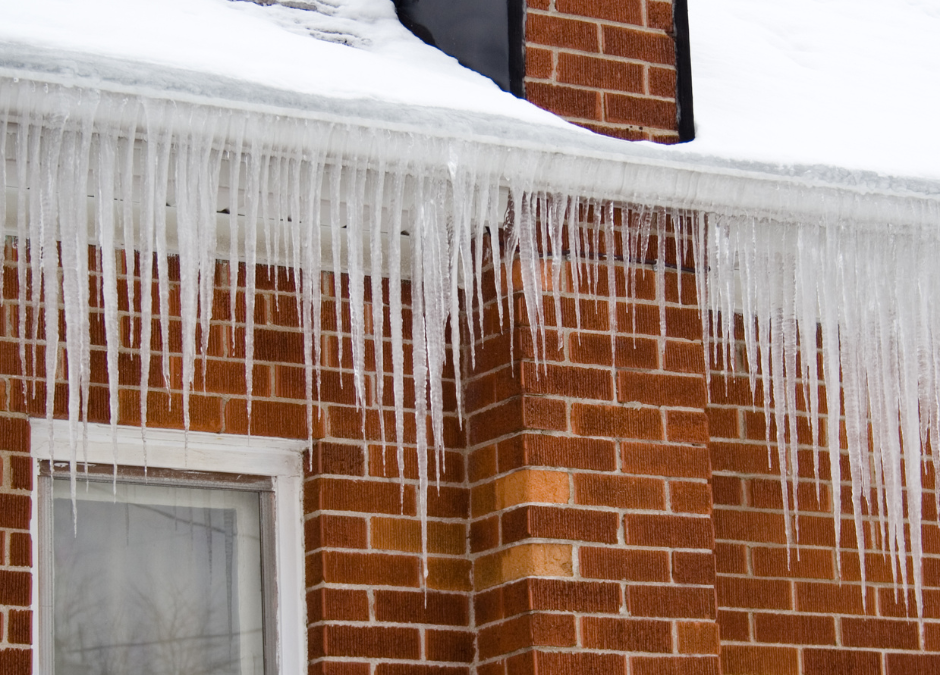
Ice storms are a notable Louisville winter hazard. Freezing rain can coat gutters, downspouts, and roof edges with thick ice layers that add significant weight to drainage components. Gutters that are already weakened by corrosion, loose hangers, or clogged channels may fail under this additional load. Additionally, ice-filled gutters cannot drain, meaning subsequent rainfall or snowmelt has no exit path except over the gutter edge—creating overflow at the worst possible locations.
Louisville also receives substantial winter precipitation in the form of rain. Gutters that are clogged with autumn leaves or compromised by damage cannot handle these winter rain events effectively, leading to overflow that saturates foundation soils, creates basement seepage risks, and accelerates erosion around landscape beds. The region’s clay-heavy soils drain slowly and can become problematic when repeatedly saturated by misdirected runoff during winter months.
Benefits of proactive winter preparation
Proper winter gutter preparation delivers several important advantages. First, it maintains drainage functionality throughout the season. Gutters that are clean, properly sloped, and free of obstructions continue to move water away from the roof and foundation even during heavy winter storms, reducing interior and exterior water damage risks.
Second, preparation minimizes ice-related damage to the gutter system itself. Removing debris and standing water eliminates the materials most likely to freeze and expand, thereby reducing stress on gutter channels, seams, and mounting hardware. Systems that enter winter in sound condition—with secure attachments and no leaks—are far more resilient to freeze-thaw cycles.
Third, winter-ready gutters reduce safety hazards around the property. Ice accumulation along roof edges can create falling ice dangers, while overflow from clogged systems can freeze on walkways and driveways, creating slip-and-fall risks for residents and visitors. Addressing these vulnerabilities before winter weather establishes makes the property safer.
Additionally, maintaining effective drainage protects adjacent building components. Overflow from failed gutters can saturate soffit and fascia wood, run behind siding materials, or back up under shingles—all of which cause hidden moisture damage that may not surface until warmer months. By keeping gutters functional through winter, homeowners protect these interconnected systems.
Consequences of entering winter unprepared
Neglecting winter gutter preparation exposes homes to multiple risks. Gutters filled with wet leaves and organic debris are prone to freezing solid when temperatures drop. The resulting ice mass can weigh hundreds of pounds and place enormous stress on hanger brackets and fascia boards, often causing gutters to pull away from the house or sag severely.
Downspouts are especially vulnerable to blockage. When water freezes inside a downspout, it forms a solid plug that prevents any drainage. Rain or snowmelt that occurs afterward has nowhere to go and backs up into the gutter, eventually overflowing—usually near foundation walls, basement windows, or entryways where water infiltration potential is highest.
Freeze-thaw cycles worsen existing defects. A minor seam separation that causes occasional dripping in autumn can become a major failure in winter as water collects at the gap, freezes, expands, and widens the opening. Similarly, a slightly loose hanger may hold through normal conditions but fail when ice weight is added.
Foundation and basement risks increase significantly when gutters overflow during winter. Water that collects near foundation walls saturates clay soils; when this saturated soil freezes, it expands and exerts lateral pressure that can crack foundation walls or cause shifting. For homes with basements, saturated soils increase hydrostatic pressure and the likelihood of water seepage through cracks or mortar joints.
What comprehensive preparation includes
Effective winter gutter preparation addresses multiple critical elements. Complete debris removal is the starting point—every section of gutter and every downspout must be cleared of leaves, seeds, twigs, and decomposing matter. Louisville’s tree species, including oaks and maples, shed materials that can compact tightly in gutters and are difficult to remove once frozen.
Thorough inspection follows cleaning. This means checking each hanger and bracket for secure attachment to fascia boards, examining every seam and joint for gaps or corrosion, verifying that end caps are sealed and intact, and confirming that all downspout connections are tight and properly aligned. Special attention should be given to corner areas and downspout inlets where stress concentrates.
Slope assessment ensures gutters maintain proper pitch toward downspouts. Sections with inadequate slope retain standing water that will freeze; sections with reverse slope create ponding areas that become ice formation sites. Adjusting pitch before winter eliminates these vulnerabilities.
Downspout performance testing confirms that water flows freely from gutter to discharge point. Each downspout should be flushed to verify there are no internal obstructions. Extensions and splash blocks should be positioned to carry water at least four to six feet from the foundation and should be checked to ensure they haven’t shifted position or become buried.
For homes with gutter guards, preparation includes cleaning accumulated fine debris from the guard surface, checking that guards are securely fastened and haven’t shifted out of position, and verifying that heavy rainfall can still enter the gutter system without overshooting or backing up.
Preventive upgrades and enhancements
Beyond basic preparation, several improvements can enhance winter performance. Heat cable or roof de-icing cables can prevent ice dam formation in vulnerable areas such as north-facing roof sections or valleys where snow accumulates and melts unevenly. These systems should be installed according to manufacturer specifications and activated before ice forms rather than after problems develop.
Improving attic insulation and ventilation addresses one of the root causes of ice dams—uneven roof heating. When conditioned air escapes into the attic, it warms the roof deck and melts snow; the meltwater then runs to the colder eaves and refreezes. Proper insulation keeps warmth in living spaces, and adequate ventilation maintains uniform attic temperatures that prevent this cycle.
For properties with recurring winter drainage issues, system modifications may be warranted. Upgrading to larger gutter profiles increases capacity and reduces overflow potential during intense precipitation events. Adding downspouts shortens the horizontal travel distance for water and distributes foundation discharge across more locations, reducing concentrated runoff.
Timing and professional considerations
The optimal time for winter gutter preparation in Louisville is November—after the majority of leaf fall but before sustained freezing temperatures arrive. This timing allows work to proceed safely in moderate weather and ensures systems are ready when winter conditions establish.
Professional services are particularly valuable for multi-story homes, complex rooflines, or situations requiring repairs beyond simple cleaning. Professionals can safely access difficult areas, identify problems that might be overlooked by untrained observers, and perform repairs using appropriate materials and proven techniques. Many also provide written reports documenting conditions and recommendations for future action.
Conclusion
Winter gutter preparation is a timely, preventative maintenance activity that helps Louisville homeowners protect their drainage systems and structures from the demands of Kentucky winter weather. Cardinal Gutters of Louisville, KY encourages property owners to recognize the importance of seasonal preparation, understand the local climate factors that create risk, and appreciate the benefits of entering winter with gutters that are clean, secure, and properly configured. By addressing vulnerabilities before cold weather arrives, homeowners can avoid costly damage, maintain effective water management, and protect their investment through the challenging winter months. This educational overview is intended to inform decision-making and does not imply specific service guarantees.