
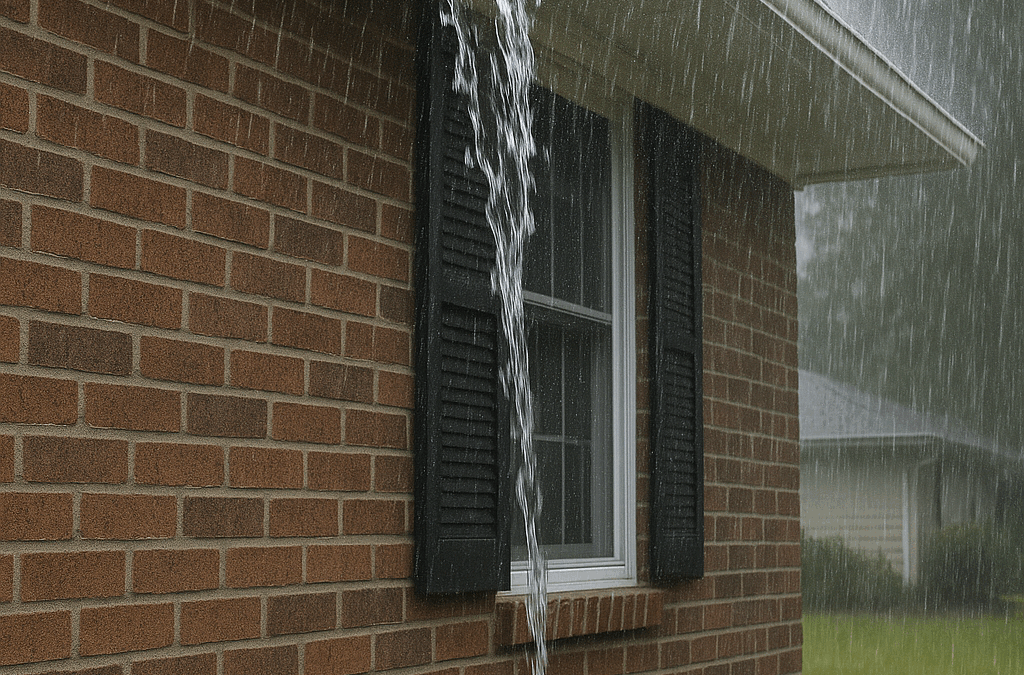
Louisville weather can change quickly, bringing thunderstorms, strong wind, heavy rainfall, hail, freeze-thaw conditions, and falling branches across the Ohio Valley. These weather events can place a surprising amount of stress on a home’s gutter system. Although gutters may look simple from the ground, they rely on secure hangers, stable fascia boards, clear channels, properly sealed corners, and working downspouts to direct water safely away from the structure. Cardinal Gutters believes Louisville, Kentucky homeowners benefit from knowing what storm damage can look like, how to inspect gutters safely after severe weather, and why recurring drainage problems should not be ignored.
Why Post-Storm Gutter Inspections Matter
A storm may expose an existing gutter weakness that was not obvious during normal weather. A partly blocked downspout may handle a brief shower but fail during a heavy Ohio Valley rainstorm. A loose hanger may hold during dry weather but pull farther away from the fascia under the added weight of wet leaves and standing water. A small gap at a corner may not drip during a gentle rain but can leak steadily when a storm sends a high volume of runoff through the channel.
Louisville’s seasonal weather patterns also add another layer of concern. Heavy autumn leaf fall can create debris blockages before winter rainfall and freeze-thaw conditions arrive. Winter storms may add ice weight to gutters that are already holding water or debris. Spring storms can bring intense rainfall while soils are already wet, increasing the importance of keeping downspout discharge away from the foundation.
A post-storm inspection helps homeowners identify whether the system is still collecting water, moving it toward the downspouts, and releasing it away from the home as intended.
Start Safely and Inspect From the Ground
The safest first inspection is always from the ground. Wait until lightning, high winds, and immediate storm hazards have passed. Avoid walking beneath damaged trees, standing near downed power lines, or climbing ladders on wet or unstable ground.
Walk the perimeter of the home and look up at the gutter line. A properly secured gutter should follow the roof edge in a smooth, consistent line. Look for sections that sag, tilt outward, pull away from the fascia, or appear bent. Pay close attention to corners and roof valleys, where larger volumes of water may enter the gutter during rainfall.
Binoculars can help homeowners inspect second-story gutter runs and roof edges. From a safe location, look for leaves and branches lodged in channels, missing end caps, detached downspouts, or visible gaps between the gutter and the fascia board.
Common Wind and Branch Damage
Wind can affect gutter systems in several ways. Strong gusts may loosen fasteners, shift downspout sections, or cause a gutter channel to flex and lose alignment. A gutter that is still attached but no longer level may drain poorly and develop standing water after future storms.
Falling branches are more obvious but can cause a wider range of damage than homeowners initially notice. A branch may dent an aluminum gutter, bend a downspout elbow, crack an end cap, or pull the gutter away from the fascia. It may also damage shingles or drip edge above the gutter, allowing water to reach areas that are not normally exposed.
Louisville’s mature tree canopy makes branch impact a relevant concern in many neighborhoods. Oaks, sycamores, maples, walnuts, and other large hardwoods can shed limbs during high wind, especially when saturated by rain or weighed down by ice. Even small branches can create a blockage if they land near a downspout opening and trap leaves behind them.
Look for Overflow Evidence Around the Home
After a storm, the landscaping and exterior walls often show whether gutters overflowed. Inspect the areas below roof edges, corners, and downspout locations for:
- Mulch washed out of beds
- Soil erosion or channels near the foundation
- Mud splatter on siding or brick
- Water stains beneath gutter seams
- Pooled water close to basement walls
- Damaged plants near downspout outlets
- Bare spots where repeated water flow has removed topsoil
These symptoms are important in Louisville because clay-bearing Ohio Valley soils can retain moisture and expand when saturated. Repeated concentrated runoff near the foundation can contribute to wet basement conditions, hydrostatic pressure against below-grade walls, and uneven soil moisture around footings.
Not every wet basement or foundation crack is caused by a gutter issue, but gutter overflow and poorly managed downspout discharge are practical conditions to evaluate when moisture repeatedly appears after storms.
Check for Standing Water and Slope Problems
Once conditions are safe, a gutter system can be observed after rain or carefully tested later with a garden hose. Water should travel toward the downspout rather than remain in low spots. Standing water indicates that the gutter may have lost its intended slope.
Slope problems can develop for several reasons. Hangers may have loosened. Fasteners may have pulled out of weakened fascia. A branch strike may have bent a section of channel. Heavy debris may have added enough weight to create a sag. Whatever the cause, standing water should not be ignored. It increases the load on the gutter, encourages debris accumulation, and creates a freeze-related risk during Louisville winter weather.
Water that remains in a gutter after rainfall can freeze during cold events. Ice is much heavier than flowing water, and the weight of ice-filled channels can bend gutters, loosen hangers, damage fascia, or contribute to detachment in severe conditions.
Inspect Seams, Miters, and End Caps
Every gutter system has potential leak points. Even seamless gutters have end caps, corner miters, outlets, and downspout connections. These components are usually sealed, but sealant can age, shrink, crack, or separate as temperatures change.
After a storm, inspect the exterior below these points for dripping, mineral streaks, dark stains, or rust-colored marks. On white or light-colored siding, repeated seam leaks may create noticeable vertical staining. On brick or masonry, water may leave mineral deposits that appear as pale or white residue.
Corner miters deserve close attention because they often receive a high volume of water when roof planes meet at valleys or hip intersections. A small leak at a miter can become more visible during a high-volume rainstorm, making post-storm inspection an ideal time to identify it.
Inspect Downspouts and Extensions
Downspouts carry water from the gutter channel to ground level, so any storm damage to these vertical sections can affect the whole system. Look for bent downspouts, separated elbows, missing straps, loose wall connections, and crushed lower sections.
Downspout extensions should also be inspected. Flexible extensions can be shifted by wind, moved by lawn equipment, or buried under storm debris. Rigid extensions may be bent, disconnected, or blocked by leaves and sediment. A downspout that ends directly beside the foundation or releases water into a depression can undermine the purpose of the entire gutter system.
For homes with underground drainage connections, inspect the outlet location. A blocked pop-up emitter, clogged outlet pipe, or sediment-covered discharge point can cause water to back up through the system. If water remains at the downspout opening or overflows at the top of the downspout during rain, an underground blockage may be contributing to the problem.
Examine Fascia, Soffit, and Roof Edge Conditions
Gutter problems often affect the materials behind and beneath the gutter. If water runs behind the gutter, overflows repeatedly, or leaks through joints, it can contact fascia boards and soffit panels.
After severe weather, look for peeling paint, dark discoloration, swollen wood, soft areas, water streaks, or separated soffit panels. These signs may indicate that the gutter has not been managing water properly for some time, even if the storm made the condition more noticeable.
Also look along the roof edge for damaged or lifted shingles, bent drip edge flashing, and debris trapped where roof valleys meet gutters. These areas influence whether roof runoff enters the gutter channel correctly or bypasses it behind the system.
Use Photos to Track Conditions
Photographing storm-related conditions is a practical step for homeowners. Take photos of damaged gutter sections, tree limbs, detached components, erosion patterns, and water stains. Include wider photos showing the location on the home and close-up images showing the specific condition.
A simple record can help distinguish between a one-time storm issue and a recurring drainage pattern. For example, if the same corner overflows during several storms, the problem may involve gutter size, roof valley flow, inadequate slope, or a downspout capacity issue rather than temporary debris alone.
Conclusion
Storm damage can affect Louisville gutters through high wind, heavy rain, falling branches, debris blockages, ice weight, and drainage disruption. For Cardinal Gutters and Louisville, Kentucky homeowners, inspecting the gutter system after storms is an important way to identify bent channels, loose hangers, clogged downspouts, leaking seams, displaced extensions, and moisture evidence near the foundation. A careful ground-level inspection, combined with attention to drainage patterns and visible changes around the roofline, helps homeowners understand how their gutter system responded to severe Ohio Valley weather and where maintenance or repair may be needed before the next storm arrives.