
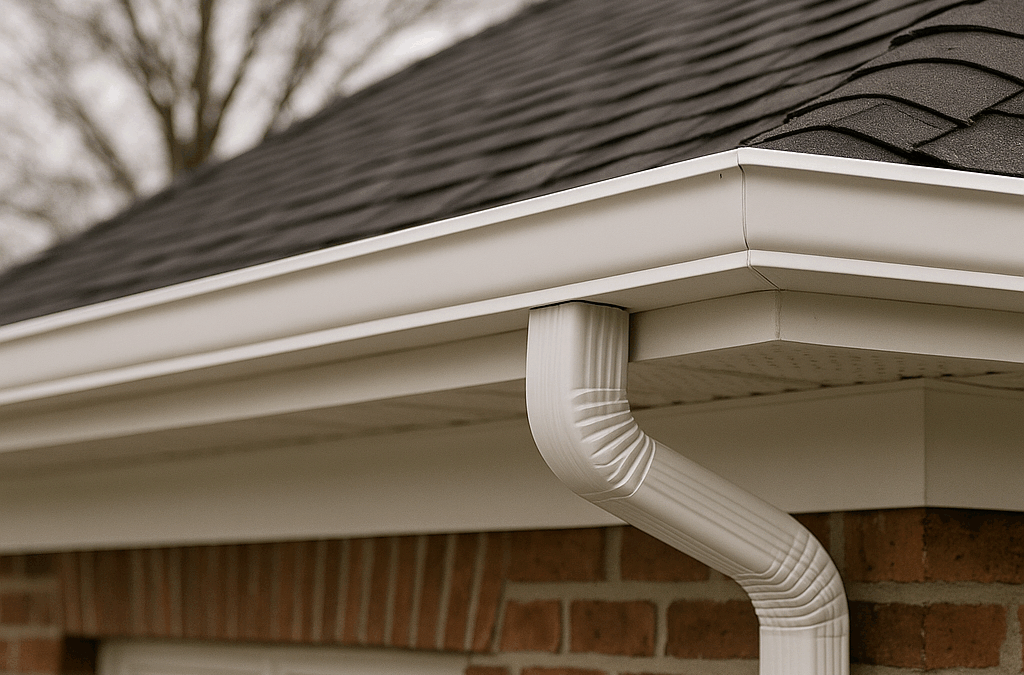
Louisville, Kentucky homeowners evaluating gutter options frequently encounter references to “seamless gutters” and naturally question what distinguishes these systems from traditional gutters and whether those differences provide meaningful benefits for their homes. Seamless gutters have emerged as the preferred choice for residential gutter installations throughout the Louisville area, yet many property owners lack clear understanding of what makes them unique, what performance advantages they offer, and how they function specifically in Louisville’s climate conditions. Cardinal Gutters observes that Louisville-area homeowners who understand seamless gutter construction, manufacturing processes, practical benefits, and potential limitations make better-informed decisions selecting gutter systems providing optimal protection for their specific properties and circumstances.
Seamless Gutter Construction Fundamentals
Seamless gutters represent a fundamentally different construction approach compared to traditional sectional gutters. Conventional sectional gutters are manufactured in standard-length sections, typically 10 feet, that installers connect together using various joining hardware including slip joints, corner pieces, and sealing compounds. These connections create joints every 10 feet along straight gutter runs, with each joint representing a potential vulnerability where leaks can eventually develop. Seamless gutters, conversely, consist of continuous custom-length gutter sections manufactured on-site to precisely match each roof edge, eliminating intermediate joints along straight runs.
Seamless gutter manufacturing utilizes specialized portable equipment called roll-forming machines or seamless gutter machines. Contractors bring these machines to job sites where they feed flat metal coil material—most commonly aluminum, though steel and copper are also options—through progressive forming rollers. As the flat coil passes through the machine, the rollers gradually bend and shape it into the desired gutter profile. The two most common profiles are K-style gutters (featuring a decorative front resembling crown molding) and half-round gutters (featuring a semicircular cross-section popular in historic architecture). The machine produces continuous formed gutter in whatever length the specific installation requires, limited primarily by practical material handling considerations rather than predetermined section lengths.
This on-site custom fabrication represents the crucial distinction between seamless and sectional systems. Instead of joining multiple factory-cut sections, installers create single continuous pieces spanning entire roof edges. It’s important to note that “seamless” specifically describes the absence of seams along straight gutter runs, not the complete elimination of all connections—any gutter system requires corners where perpendicular roof edges meet, end caps to close gutter ends, and downspout outlets where gutters connect to vertical downspouts. However, seamless construction dramatically reduces total connection points compared to sectional alternatives, directly translating to improved reliability.
Louisville’s Climate and Seamless Gutter Benefits
Louisville’s humid subtropical climate receiving approximately 45 inches of annual precipitation creates conditions where seamless gutter advantages become particularly meaningful. The city experiences frequent thunderstorms, especially during spring and summer months, delivering intense rainfall that places significant demands on residential gutter systems. During heavy precipitation events, water flows through gutters at maximum capacity, creating substantial hydraulic pressure throughout the entire system. In sectional gutters, this pressure concentrates at each joint connecting separate sections, repeatedly stressing these vulnerable connection points. Years of repeated stress cycles gradually degrade joints, causing leaks to develop where sections meet.
Seamless gutters eliminate these intermediate joints along straight runs, removing the primary failure points where sectional systems most commonly develop problems. The continuous construction allows the gutter to function as a unified structural element distributing hydraulic forces throughout its entire length rather than concentrating stress at multiple connection points. This fundamental structural advantage translates directly into improved long-term reliability and reduced leak development, particularly valuable in Louisville where frequent heavy rainfall creates numerous high-stress events throughout each year.
Louisville’s elevated humidity persisting between rainfall events negatively affects sectional gutter performance. Water frequently remains trapped at joint locations after rain ends, maintaining persistent moisture at connections where separate gutter sections meet. This standing water accelerates corrosion at metal joints, degrades sealant materials, and creates conditions where leaves and organic debris collect more readily at the slight profile interruptions that joint hardware creates inside gutters. Seamless gutters feature smooth continuous interiors along straight sections, promoting more complete drainage and easier cleaning while reducing locations where moisture and debris can accumulate and cause problems.
Temperature variations between Louisville’s warm summers and cool winters cause metal gutters to expand and contract with thermal cycling. These dimensional changes occur in all gutter systems regardless of construction type, but affect sectional and seamless systems differently. In sectional gutters, thermal expansion and contraction repeatedly stress joints as metal sections push against and pull away from connecting hardware with each temperature cycle. Over years of service, this repetitive movement gradually loosens connections and degrades seals. Seamless gutters handle thermal movement more effectively because continuous sections expand and contract as single unified pieces without intermediate joints that must repeatedly flex and potentially separate.
Primary Advantages of Seamless Design
The most significant benefit seamless gutters provide involves dramatically reduced leak potential. Consider a typical Louisville home with 120-150 feet of gutter. Using sectional construction, this would require 12-15 joints along straight runs to connect all the 10-foot sections, plus additional connections at corners and downspout locations. Each joint represents a potential leak point where water can escape. Seamless construction eliminates those intermediate straight-run joints entirely, reducing total potential leak locations by approximately 60-80 percent depending on home configuration. Fewer vulnerable connections directly translates to improved long-term reliability and reduced frequency of repairs.
Improved structural integrity represents another meaningful advantage. Continuous metal construction inherently provides greater strength and rigidity compared to segmented construction relying on joint hardware for structural continuity. This enhanced strength better resists sagging under the weight of accumulated leaves and debris, provides greater stability during high-volume water flow, and offers superior wind resistance during severe weather events. These structural benefits prove particularly valuable during Louisville’s spring severe weather season when strong winds and heavy rainfall often coincide.
Enhanced aesthetic appeal matters to homeowners concerned with property appearance and value. Seamless gutters create clean, uninterrupted lines along roof edges without the visual breaks that sectional gutter joints create every 10 feet. The smooth professional appearance contributes to overall home aesthetics, particularly noticeable on front-facing elevations where gutters are most visible to passersby and potential buyers. While most homeowners prioritize performance over appearance, the aesthetic improvement seamless systems provide represents a welcome additional benefit.
Reduced maintenance requirements result from having fewer connection points requiring inspection, potential re-sealing, and leak repairs. While all gutters need periodic cleaning to remove leaves and debris regardless of construction type, seamless systems generally require less ongoing attention to joint maintenance that sectional systems demand. Over a typical gutter system’s 20-30 year service life, this maintenance reduction translates to meaningful time savings and reduced long-term costs.
Material Options for Seamless Systems
Aluminum represents the most common material for seamless gutters in Louisville residential applications. Aluminum offers several ideal properties for gutter construction: excellent corrosion resistance essential in humid climates, light weight simplifying handling and installation, moderate cost accessible to most budgets, and availability in numerous factory-applied colors allowing coordination with home exteriors. Standard residential aluminum gutter material measures .027 inches thick, though premium .032-inch material provides enhanced durability and strength for homeowners willing to invest more. Aluminum naturally resists rust through protective oxide formation, and modern baked-on enamel finishes provide additional weather protection while delivering attractive long-lasting appearance.
Steel seamless gutters, typically galvanized or painted, offer superior strength and rigidity compared to aluminum. The enhanced structural properties can benefit installations requiring maximum strength, though Louisville’s climate without heavy snow loading makes extreme strength less critical than in northern regions. Steel’s primary disadvantages include significantly greater weight complicating installation and handling, plus greater susceptibility to rust if protective coatings become scratched or damaged. Given Louisville’s humid climate, aluminum’s superior corrosion resistance generally proves more valuable than steel’s strength advantages for typical residential applications.
Copper seamless gutters represent premium options delivering exceptional longevity measured in generations, distinctive appearance that many find beautiful, and natural antimicrobial properties that resist biological growth. Copper develops characteristic patina over years of exposure, transitioning from bright metallic copper through brown tones to eventual blue-green, creating unique aesthetic character. However, copper costs substantially more than aluminum or steel—typically three to five times as much—making it practical primarily for high-end homes, historic restorations, or situations requiring coordination with existing copper roofing or architectural elements.
Professional Installation Necessity
Seamless gutter installation requires specialized equipment that typical homeowners don’t own, making professional installation essentially mandatory. The portable gutter-forming machines necessary for on-site fabrication represent substantial capital investments, typically ranging from $15,000 to $40,000 or more depending on machine capabilities, features, and quality. Only professional gutter contractors maintain this specialized equipment and develop the expertise to operate it effectively and safely. This contrasts with sectional gutters that homeowners can purchase at retail building supply centers and potentially install themselves, though professional installation remains advisable for optimal results with any gutter type.
The custom fabrication process inherent to seamless systems means each installation is unique work specifically tailored to the individual home. Contractors must accurately measure each roof edge, calculate proper slope for water drainage, plan optimal downspout locations, and fabricate gutters precisely matching these specifications. This customization ensures optimal fit and performance but eliminates the standardization that makes sectional systems more predictable in cost and availability. Homeowners should expect professional site visits for measurement and assessment, formal written quotations, and scheduled installation appointments rather than immediate same-day service.
Cost Considerations
Seamless gutters typically cost more than sectional alternatives on a per-linear-foot installed basis. While raw material costs remain generally comparable, the specialized equipment requirements, professional installation necessity, and custom fabrication process increase labor costs compared to sectional installation. Louisville homeowners should generally expect seamless gutter installation to cost approximately 10-30 percent more than comparable sectional systems, though exact pricing varies based on specific circumstances, materials selected, home configuration complexity, and local market conditions.
However, evaluating total cost of ownership over the gutter system’s complete service life often favors seamless construction despite higher upfront costs. The dramatically reduced leak potential, lower ongoing maintenance requirements, and typically longer service life before replacement becomes necessary can offset higher initial expenses. When considering gutter options, analyzing total expected costs over 20-30 years provides more complete financial perspective than comparing only initial installation prices.
Maintenance Requirements
Seamless construction reduces but doesn’t eliminate maintenance needs. While seamless gutters require less attention to joint inspection, sealant maintenance, and leak repairs compared to sectional systems, they still need regular cleaning and periodic evaluation. Debris accumulation occurs regardless of construction type—leaves, twigs, and organic material collect in seamless gutters just as in sectional systems. Louisville homeowners should maintain regular cleaning schedules appropriate for their specific circumstances, typically at minimum twice annually in spring and fall, with additional cleanings if heavy tree coverage deposits substantial debris throughout growing season.
The connection points that do exist in seamless systems—corners, end caps, and downspout outlets—still require periodic inspection for potential leaks or damage. While far fewer vulnerable points exist compared to sectional systems, the connections present still need attention. Annual inspections identifying small developing problems before they become serious damage remains advisable regardless of gutter construction type.
Conclusion
Seamless gutters represent advanced gutter system design offering substantial performance advantages for Louisville, Kentucky homes, particularly given the region’s significant rainfall, frequent intense storms, and humid climate conditions that progressively stress traditional sectional gutter systems. Cardinal Gutters recognizes that Louisville-area homeowners benefit from understanding what seamless construction entails, how it differs fundamentally from sectional alternatives, and what specific advantages continuous design provides under local climate conditions. While seamless gutters require professional installation using specialized equipment and typically involve higher initial costs than sectional alternatives, the dramatically reduced leak potential, improved structural integrity, enhanced appearance, and lower long-term maintenance requirements make them an excellent choice for homeowners prioritizing reliable long-term performance and lasting value protecting their properties from water damage throughout decades of Louisville weather exposure.