Louisville, Kentucky homeowners seeking durable, weather-resistant exterior solutions frequently select vinyl soffit as a superior alternative to traditional wood materials. Vinyl soffit—the synthetic product covering roof overhang undersides—has become the standard choice in residential applications due to exceptional moisture resistance, complete immunity to insect damage, and virtually maintenance-free performance over decades of service. Cardinal Gutters regularly advises Louisville-area property owners considering vinyl soffit for new installations or addressing damaged existing systems. Understanding vinyl soffit materials and construction, how it performs specifically in Louisville’s humid subtropical climate, why professional installation expertise proves essential, and when repair versus replacement represents the appropriate solution empowers homeowners to make informed decisions protecting their investments while minimizing long-term maintenance costs and commitments.
Vinyl Soffit Material Properties and Construction
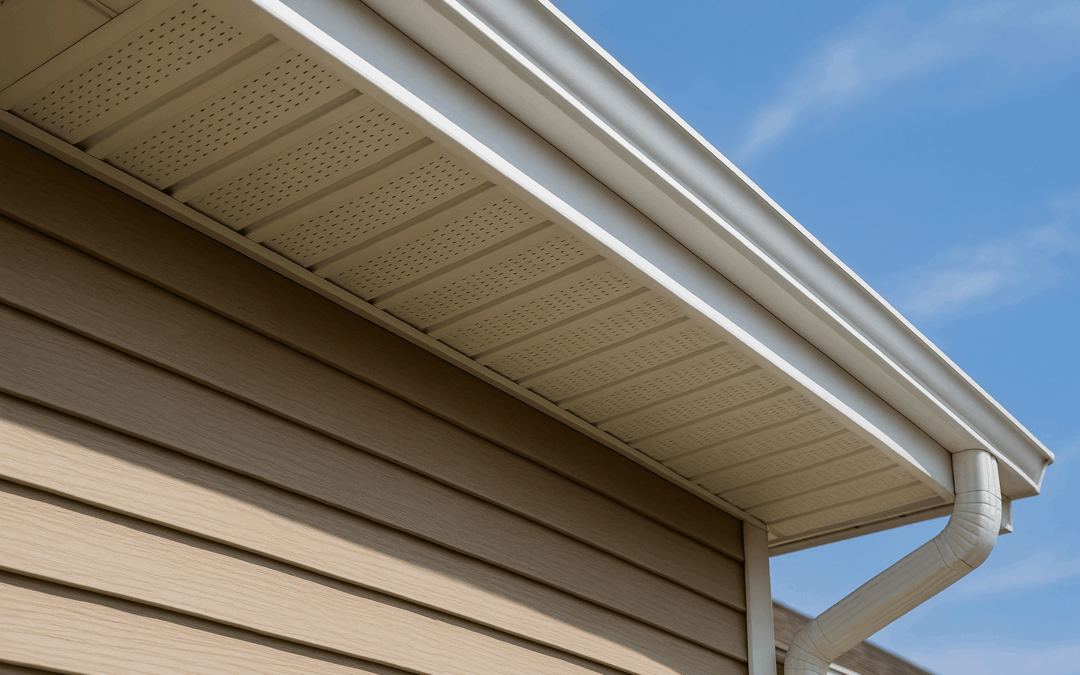
Vinyl soffit comprises engineered polyvinyl chloride (PVC) panels specifically manufactured for demanding exterior residential applications. Unlike organic materials susceptible to moisture absorption and biological attack, vinyl is entirely synthetic, created through extrusion manufacturing processes producing uniform panels with consistent thickness, integral coloring throughout material depth, and engineered profiles designed for both visual appeal and functional effectiveness. Modern vinyl soffit includes various styles—solid panels for non-ventilated applications, fully perforated panels providing maximum attic ventilation, and combination panels featuring solid edges with perforated centers balancing aesthetics and airflow.
Manufacturing processes incorporate specific additives enhancing exterior performance capabilities. Ultraviolet stabilizers prevent color degradation and material breakdown from prolonged sun exposure. Impact modifiers increase resistance to physical damage from hail, falling branches, and accidental impacts. Thermal compounds enable vinyl to withstand temperature extremes without warping, cracking, or becoming brittle. Color pigmentation throughout material thickness ensures scratches don’t expose contrasting base material. These engineered characteristics create products fundamentally superior to natural wood for exterior applications.
Standard vinyl soffit panels typically measure 12 feet in length with widths varying by style—common dimensions include 12-inch and 16-inch widths. Panel edges incorporate interlocking profiles enabling secure connections between adjacent pieces while permitting necessary thermal expansion and contraction. Complete installations require specialized accessories including J-channel receiving strips, F-channel edge profiles, corner pieces for inside and outside angles, and fascia mounting channels. Successful installation demands understanding how these components integrate creating weathertight systems accommodating thermal movement while maintaining structural soundness and professional appearance.
Why Vinyl Soffit Performs Exceptionally in Louisville’s Climate
Louisville’s humid subtropical climate receiving approximately 45 inches of annual precipitation, experiencing elevated humidity frequently exceeding 70 percent, and enduring temperature ranges from occasional winter freezing to summer highs in the mid-90s creates challenging conditions for exterior building materials. Vinyl soffit excels under these demanding circumstances through inherent material advantages. Complete moisture immunity means vinyl never absorbs water regardless of exposure severity or duration—rain, humidity, and direct water contact cause zero material degradation. This absolute moisture resistance prevents the rot, decay, warping, and swelling that destroy wood soffit in Louisville’s damp climate conditions.
Total insect immunity provides another critical benefit. Termites, carpenter bees, carpenter ants, and other wood-destroying insects prevalent in Louisville cannot damage vinyl soffit because synthetic materials provide no food value. Homeowners installing vinyl soffit eliminate concerns about extensive insect damage requiring expensive repairs that inevitably affect wood materials. This resistance proves particularly valuable in Louisville where termite activity continues year-round and carpenter bees actively attack exposed wood during warm seasons.
Thermal performance characteristics suit Louisville’s seasonal temperature variations. Quality vinyl soffit maintains dimensional stability through Louisville’s hot humid summers without warping, sagging, or heat deformation. During winter cold periods and occasional hard freezes, properly installed vinyl accommodates thermal contraction without cracking or pulling loose from mounting systems. Material flexibility allows movement in response to temperature changes while preserving installation integrity—performance wood cannot achieve as it rigidly expands and contracts causing joint failure and fastener loosening.
Maintenance advantages become immediately evident. Vinyl soffit never requires painting—color remains consistent throughout decades of service without periodic refinishing costs. Cleaning involves only occasional water rinsing to remove accumulated pollen and surface dirt. No sanding, scraping, caulking, or other labor-intensive tasks wood demands. This maintenance-free performance saves substantial time and money over material life while maintaining consistent attractive appearance.
The Necessity of Professional Installation Expertise
While vinyl soffit offers superior material properties, realizing optimal long-term performance requires professional installation capabilities. Accurate measurement and material calculation form critical foundations—professionals precisely measure all soffit areas accounting for complex roof geometries, calculate exact material quantities including appropriate waste factors, and specify correct accessories for specific applications. Measurement errors produce material shortages delaying projects or excessive waste increasing costs. Homeowners attempting installation commonly underestimate measurement complexity, particularly around angles, intersections, and irregular features.
Proper ventilation calculation represents essential professional knowledge. Building codes specify minimum attic ventilation requirements based on attic square footage and roof configuration. Professionals calculate required vent area, determine appropriate vented soffit coverage, and ensure installations provide adequate airflow coordinating with ridge vents, gable vents, or other exhaust systems. Inadequate ventilation causes moisture accumulation, roof decking damage, and shingle deterioration. Improper ventilation creates weather infiltration problems. These calculations require building science understanding beyond typical homeowner knowledge.
Installation technique mastery proves critical. Vinyl soffit must be installed permitting thermal expansion and contraction—panels fastened too tightly buckle during heat expansion, while loose installation creates gaps and wind damage vulnerability. Professionals understand precise clearance requirements, proper fastener placement avoiding movement restriction, and correct accessory installation creating weathertight transitions. Cutting vinyl demands appropriate tools and techniques—improper cutting creates rough edges, inaccurate dimensions, and installation difficulties. Complex areas including gables, dormers, and valleys require advanced skills properly fitting materials around obstacles.
Fascia preparation critically affects installation success. Existing fascia boards must be structurally sound, properly secured, and correctly aligned before soffit installation begins. Deteriorated fascia requires repair or replacement—installing new soffit over damaged fascia guarantees failure. Professionals evaluate fascia condition, complete necessary repairs, install proper receiving channels, and ensure correct alignment. Homeowners often overlook this essential preparation, attempting soffit installation over inadequate substrates unable to provide necessary support.
When Vinyl Soffit Repair Becomes Necessary
Despite vinyl’s exceptional durability, damage occasionally occurs requiring professional intervention. Physical impacts from falling tree limbs, ladder strikes, or severe hail can crack or puncture panels. High winds during storms may dislodge improperly installed panels or damage trim allowing water infiltration. Improper original installation sometimes creates problems appearing years later—inadequate fastening, incorrect clearances, or missing components produce failures requiring correction.
Professional damage assessment determines extent and appropriate solutions. Minor damage affecting small areas may suit panel replacement—professionals remove damaged sections, install matching new panels, and ensure proper integration with surrounding material. Extensive damage affecting large areas or indicating systemic installation problems may warrant complete replacement rather than piecemeal repairs leaving other areas vulnerable to failure.
Matching existing vinyl soffit sometimes presents challenges. Vinyl formulations and colors change as manufacturers modify products. Older installations may use discontinued colors or styles making exact matches impossible. Professional installers access industry resources identifying closest available matches or recommend strategic approaches minimizing appearance differences. Homeowners attempting repairs often discover matching difficulties after purchasing incompatible materials wasting money.
Vinyl Installation Versus Wood Replacement Decisions
Property owners facing deteriorated wood soffit frequently compare vinyl installation costs against wood replacement expenses. While vinyl materials cost more than basic wood, total installed costs prove competitive considering all factors. Professional vinyl installation eliminates future painting, periodic repairs, and premature replacement wood requires. Life-cycle cost analysis consistently favors vinyl despite higher initial investment.
Performance advantages extend beyond cost considerations. Complete moisture and insect immunity, minimal maintenance demands, consistent appearance retention, and superior longevity combine creating value wood cannot provide in Louisville’s climate. Homeowners choosing vinyl make one-time investments providing decades of trouble-free performance versus ongoing wood maintenance cycles consuming time and money indefinitely.
Risks Associated with Improper Installation
Incorrectly installed vinyl soffit creates multiple problems affecting performance and longevity. Inadequate ventilation causes attic moisture accumulation, roof decking damage, and shingle deterioration. Panels installed without proper expansion allowances buckle and warp during temperature changes. Improper fastening allows wind damage or panel separation. Poor workmanship creates water infiltration paths causing hidden damage to roof structures and fascia boards. Installation failures often remain undetected until expensive secondary damage occurs.
Professional installation provides quality assurance protecting homeowner investments. Experienced installers follow manufacturer specifications, implement proven techniques, understand local building codes, and warranty work quality. Licensed contractors maintain insurance protecting property owners from liability. Attempting DIY installation or hiring unqualified contractors saves money initially but frequently results in expensive premature failures and consequential damage repairs far exceeding original professional installation costs.
Selecting Appropriate Vinyl Soffit Products
Vinyl soffit quality varies significantly between manufacturers and product lines. Economy-grade products use thinner materials, minimal UV protection, and basic profiles suitable for limited budgets but offering reduced longevity. Premium-grade products feature thicker robust materials, advanced UV inhibitors, superior impact resistance, and enhanced aesthetic profiles. Professional installers guide product selection based on property requirements, budget parameters, and performance expectations.
Color selection affects both appearance and performance. Lighter colors reflect solar radiation reducing heat absorption and dimensional changes. Darker colors absorb heat potentially increasing expansion issues but may better complement specific architectural styles. Professionals help homeowners evaluate options balancing aesthetic preferences with practical performance considerations.
Ventilation style selection depends on attic ventilation requirements. Properties with adequate ridge or gable vents may utilize solid soffit in some areas. Properties requiring maximum soffit ventilation benefit from fully vented panels. Center-vented panels offer compromise solutions. Professional assessment determines appropriate ventilation strategies for specific properties.
Long-Term Performance and Warranty Coverage
Properly installed quality vinyl soffit commonly provides 30-50 years of maintenance-free service in Louisville’s climate. Material warranty periods typically range from 25 years to lifetime limited warranties covering defects and performance. Installation warranties from reputable contractors protect against workmanship failures. These warranty protections provide peace of mind unavailable with wood materials requiring ongoing maintenance and facing inevitable deterioration.
Vinyl soffit maintains consistent appearance throughout service life without painting or refinishing. Colors may show subtle fading after decades of intense sun exposure, but modern UV-resistant formulations minimize these effects. Overall appearance remains professional and attractive far longer than wood alternatives requiring regular maintenance to prevent obvious deterioration.
Conclusion
Vinyl soffit installation and repair in Louisville, Kentucky represents a significant home improvement decision requiring professional expertise for optimal results. Cardinal Gutters recognizes that Louisville-area homeowners benefit from understanding vinyl soffit’s superior performance characteristics in humid climates, why proper installation techniques prove critical for long-term success, and how professional assessment determines appropriate repair strategies when damage occurs. The combination of complete moisture immunity, total insect resistance, minimal maintenance requirements, and exceptional longevity makes vinyl soffit an outstanding choice for Louisville homes, with professional installation ensuring homeowners realize these benefits through properly executed work that provides decades of reliable weathertight performance protecting properties from water damage and pest infiltration while maintaining attractive curb appeal and property value.